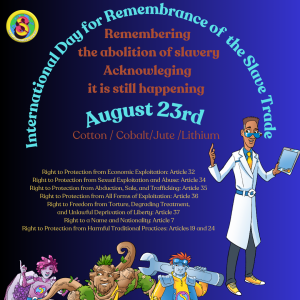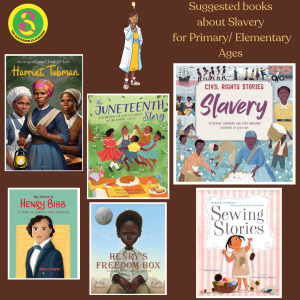






Teaching Sustainability, Anti-Slavery, and the United Nations Rights of the Child together as interdisciplinary learning for elementary/primary -aged children helps them understand complex social issues in a holistic way. This approach integrates multiple subjects, fostering a comprehensive understanding of interconnected global challenges. Here are the subjects that can be integrated:
Social Studies
History: Understanding the history of slavery, abolition movements, and the development of children’s rights.
Geography: Learning about different countries, cultures, and how global issues impact various regions.
Civics
Government and Law: Learning about laws and organizations (like the United Nations) that protect children’s rights and combat slavery.
Citizenship: Understanding individual and collective responsibilities in creating a just and sustainable world.
Science
Environmental Science: Exploring sustainability, ecosystems, and the impact of human activities on the environment.
Biology: Studying the effects of environmental degradation on living organisms and human health.
Language Arts
Reading: Engaging with stories and texts about children’s rights, historical abolitionists, and sustainable practices.
Writing: Crafting essays, stories, and reports on these topics to develop critical thinking and communication skills.
Mathematics
Data Analysis: Interpreting statistics related to child labor, environmental issues, and economic impacts of slavery and sustainability.
Problem Solving: Applying mathematical concepts to real-world problems, such as calculating carbon footprints or analysing demographic data.
Art
Visual Arts: Creating posters, drawings, and other visual representations to express ideas about children’s rights, sustainability, and anti-slavery.
Drama: Role-playing and skits to understand historical events and empathise with people affected by these issues.
Technology
Digital Literacy: Using technology to research and present information on these topics.
Environmental Technology: Learning about innovations that promote sustainability and how technology can help combat modern slavery.
Physical Education
Health Education: Understanding the physical and mental health impacts of poor working conditions and environmental degradation.
Teamwork and Cooperation: Promoting values of collaboration and empathy through group activities and sports.
Ethics and Moral Education
Values and Principles: Discussing moral and ethical considerations around fairness, justice, and human rights.
Character Education: Developing traits like empathy, responsibility, and respect for others and the environment.
Music
Cultural Awareness: Exploring songs and music from different cultures, including those related to freedom and justice movements.
Expression: Using music to express ideas and emotions about the subjects being studied
Teaching Sustainability, Anti-Slavery, United Nations Rights of the Child, and the Sustainable Development Goals (SDGs) together as interdisciplinary learning for middle & high school-aged young people is crucial. This integrated approach helps students understand the complex and interconnected nature of global challenges, fostering a deeper comprehension and engagement with these issues. Here are the subjects that can be crossed:
Social Studies
History: Exploring the history of slavery, abolition movements, and the evolution of children’s rights.
Geography: Examining global geographical differences in sustainability practices and human rights conditions.
Economics: Understanding the economic factors behind slavery, labor exploitation, and sustainable development.
Civics and Government
Law and Policy: Studying national and international laws protecting children’s rights and combating slavery.
International Relations: Analyzing the role of the United Nations and other international bodies in promoting global goals and human rights.
Science
Environmental Science: Investigating climate change, resource management, and sustainable practices.
Biology: Understanding the impact of environmental degradation on human health and ecosystems.
Language Arts
Literature: Reading and analyzing texts related to human rights, historical and contemporary slavery, and environmental issues.
Writing: Developing critical thinking and communication skills through essays, research papers, and creative writing on these topics.
Mathematics
Statistics: Analyzing data related to population growth, resource use, and human rights indicators.
Modelling: Using mathematical models to predict outcomes of various sustainability initiatives and policies.
Art
Visual Arts: Creating art projects that express themes of human rights, sustainability, and social justice.
Performing Arts: Engaging in theater or dance that tells the stories of those affected by these global issues.
Technology
Information Technology: Utilising digital tools for research, data analysis, and creating multimedia presentations on global issues.
Environmental Technology: Learning about and developing technologies that promote sustainability and combat exploitation.
Physical Education
Health Education: Understanding the physical and psychological impacts of exploitation and poor environmental conditions.
Team Building: Promoting collaboration and teamwork through activities that emphasise community and social responsibility.
Ethics and Philosophy
Moral Philosophy: Discussing ethical theories and principles related to human rights, justice, and environmental stewardship.
Character Education: Developing values such as empathy, responsibility, and respect through case studies and moral dilemmas.
Business and Economics
Corporate Social Responsibility: Exploring how businesses can operate sustainably and ethically.
Global Trade: Understanding the impact of global trade on developing countries and labor practices.
Music
Cultural Studies: Exploring music from various cultures and its role in social movements and cultural identity.
Expression and Advocacy: Using music as a means to raise awareness and advocate for human rights and environmental issues.
This interdisciplinary approach not only enhances their knowledge but also equips them with the critical thinking, empathy, and problem-solving skills needed to address these global challenges.

Several key figures are historically and globally recognised for their significant contributions to the abolition of slavery. These individuals come from various backgrounds and countries, and their efforts span different periods and forms of slavery. Some of the most notable figures include:
Frederick Douglass (1818-1895): An American social reformer, abolitionist, orator, writer, and statesman. After escaping from slavery, he became a national leader of the abolitionist movement in Massachusetts and New York, gaining note for his oratory and incisive antislavery writings.
Harriet Tubman (1822-1913): An American abolitionist and political activist. Born into slavery, Tubman escaped and subsequently made some thirteen missions to rescue approximately seventy enslaved people, including family and friends, using the network of antislavery activists and safe houses known as the Underground Railroad.
William Wilberforce (1759-1833): A British politician, philanthropist, and a leader of the movement to abolish the slave trade. His tireless efforts led to the passage of the Slave Trade Act of 1807, which ended the transatlantic slave trade for Britain, and the Slavery Abolition Act of 1833, which abolished slavery in most of the British Empire.
Sojourner Truth (1797-1883): An African American abolitionist and women’s rights activist. Born into slavery, Truth escaped with her infant daughter to freedom in 1826. She is known for her speech “Ain’t I a Woman?” delivered in 1851 at the Ohio Women’s Rights Convention.
Toussaint Louverture (1743-1803): The best-known leader of the Haitian Revolution. His military and political acumen saved the gains of the first Black insurrection in November 1791. He transformed the insurgent slaves into a revolutionary movement and eventually led Haiti to independence.
John Brown (1800-1859): An American abolitionist leader. Brown believed in and advocated armed insurrection as the only way to overthrow the institution of slavery in the United States. He is best known for his raid on the federal armory at Harpers Ferry in 1859.
Abraham Lincoln (1809-1865): The 16th President of the United States, Lincoln is best known for leading the country during the American Civil War and issuing the Emancipation Proclamation in 1863, which began the process of freedom for America’s slaves. His efforts culminated in the passing of the 13th Amendment, which abolished slavery.
Olaudah Equiano (1745-1797): An African writer whose experiences as a slave prompted him to become involved in the British abolition movement. His autobiography, published in 1789, played a pivotal role in advancing the abolitionist cause.
Elizabeth Freeman (Mum Bett) (1742-1829): An African American woman who sued for her freedom in a Massachusetts court and won, resulting in a ruling that slavery was inconsistent with the state constitution. Her case set a precedent that led to the abolition of slavery in Massachusetts.
Benjamin Franklin (1706-1790): Although initially a slave owner, Franklin became an ardent abolitionist later in life. As president of the Pennsylvania Society for Promoting the Abolition of Slavery, he petitioned the U.S. Congress to end slavery and the slave trade.