

Welcome to The Professional Learning
for Educators
Resources/Posters linked to pedagogy
Academic publications
Professional development library


Contents
- Socratic Learning
- Educator Training - ITE Sustainability Available
- Academic Resource Centre
- Why Teach Sustainability and the circular economy ?
- You Tube Links- Our Own
- You Tube Links- External University Professors
- Posters Education Theory
-
Teaching Eco Literacy In Primary -
Professional Competencies For Eco Literacy - Professional Competencies for Circular Economy Teaching
- Professional Competencies for Regenerative Education
- Earth Stewardship
- Triple Well Being Theory
- Recommended Academic Reading




Educator Training
Short course modules – Training available by emailing info@thesustainablesacademy.com
Why Teach Sustainability and
The Circular Economy in Schools?
Interdisciplinary Learning:
The circular economy involves many different fields, including science, engineering, business, and policy. Teaching the circular economy provides an opportunity for interdisciplinary learning, helping learners connect different areas of knowledge and experiences.
Environmental
Sustainability
- The circular economy aims to reduce waste and promote the efficient use of resources. By teaching learners about the circular economy, we can help them understand the importance of sustainability and the impact of our actions on the environment.
Economic Growth
- The circular economy can provide economic benefits by promoting innovation and new business models. By teaching learners about the circular economy, we can help them understand the potential for economic growth through sustainable practices.
Future Proofing
- As the world continues to face environmental challenges, it is important to prepare learners for the future. By teaching them about the circular economy, we can equip them with the knowledge and skills they need to create a more sustainable future.
Some of our Youtubes shared below
To support you and your learners – more can be found on our Youtube Channel . Please visit and subscribe .

Youtube Version - Why teach with The Sustainables?
Visit our YouTube and join our YouTube family
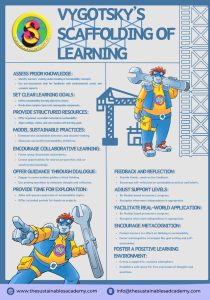
Professional Learning posters
Designed for teachers to understand the theories of learning applied to Sustainability and The Circular Economy

Plastic Recycling PPT
This powerpoint is great for professional thinking about the nature of plastic – Suitable for High school teaching too
Vape Recycling
You Tube
If young people don’t care about their personal health try an ecological approach to getting rid of vaping


Introduction to Ecological Literacy
Definition: Ecological literacy is the understanding of the natural systems that make life on earth possible. It involves knowledge of ecological principles, awareness of human impact on the environment, and the
ability to make informed decisions for sustainable living. Importance: Teaching ecological literacy at a young age helps learners develop a sense of responsibility toward the environment and fosters sustainable practices that can last a lifetime.
Core Concepts of Ecological Literacy
Interconnectedness: Understanding the interconnectedness of all living things and ecosystems (Capra, 2002).
Systems Thinking: Recognizing patterns and relationships within ecological systems (Meadows, 2008).
Sustainability: Awareness of sustainable practices and how to reduce human impact on the environment (Orr, 1992).
Biodiversity: Understanding the importance of biodiversity and the roles different species play in ecosystems (Wilson, 1984).
Environmental Ethics: Developing a sense of moral responsibility towards the environment (Leopold, 1949).
Teaching Strategies
Experiential Learning: Engage learners in hands-on activities such as gardening, recycling projects, and nature walks (Kolb, 1984).
Storytelling and Literature: Use stories and books that emphasise environmental themes (Louv, 2005).
Outdoor Education: Incorporate outdoor learning to help learners connect with nature directly (Sobel, 1996).
Project-Based Learning: Implement projects that focus on solving real-world environmental problems (Thomas, 2000).
Interdisciplinary Approach: Integrate ecological literacy across subjects such as science, social studies, and art (Orr, 1992).
Assessment of Ecological Literacy
Knowledge-Based Assessments: Quizzes, tests, and assignments on ecological concepts.
Practical Assessments: Evaluate participation in projects, experiments, and outdoor activities.
Reflective Assessments: Encourage learners to reflect on their learning and environmental actions through journals or presentations
Encouraging Environmental Stewardship
Role Modelling: Teachers should model sustainable practices in the classroom and beyond. Community Involvement: Encourage participation in local environmental initiatives and partnerships with community organisations (Sobel, 1996).
Empowerment: Help learners feel capable of making a difference by giving them responsibility in environmental projects.
References and Influential Authors
Fritjof Capra (2002) – The Hidden Connections: Capra emphasises the interconnectedness of ecological, social, and economic systems. Donella Meadows (2008
Thinking in Systems: Meadows introduces systems thinking as a fundamental concept for understanding ecological literacy. David W. Orr (1992) –
Ecological Literacy: Education and the Transition to a Postmodern World: Orr discusses the importance of integrating ecological literacy into education. E.O. Wilson (1984)
Biophilia: Wilson’s work highlights the innate connection humans have with nature and the importance of biodiversity. Aldo Leopold (1949)
Last Child in the Woods: Louv explores the importance of nature in children’s development and the concept of “nature-deficit disorder.” David Sobel (1996) –
A Sand County Almanac: Leopold’s work on environmental ethics laid the foundation for ecological responsibility. Richard Louv (2005) –
Beyond Ecophobia: Sobel advocates for age-appropriate environmental education that fosters a connection to nature. John Dewey (1938) –
Experience and Education: Dewey’s principles of experiential learning apply to ecological literacy by emphasising hands-on, real-world experiences
Howard Gardner (1983) – Frames of Mind: Gardner’s theory of multiple intelligences supports the idea that ecological literacy can be taught through various learning modalities.
Professional Competencies for Eco-Literacy
Eco-literacy competencies are essential for educators, enabling us to teach learners about sustainability, the circular economy, and environmental stewardship. These competencies combine professional knowledge, skills, and attitudes that empower us to integrate eco-literacy into their teaching effectively.
1. Knowledge-Based Competencies
We must have a robust understanding of eco-literacy concepts and frameworks to guide and support learners.
a. Environmental Systems and Processes basics
Understanding ecosystems, biodiversity, climate systems, and the interdependence of natural cycles (e.g., carbon, water, and nitrogen cycles).
Encourage real knowledge of the human impact on natural systems, for example pollution, deforestation, and climate change.
b. Sustainability Principles
Key Knowledge of the three pillars of sustainability: environmental, economic, and social.
Understand the circular economy, renewable energy, and sustainable resource management.
c. Global and Local Contexts
Awareness of global environmental challenges, such as plastic circularity & pollution and global warming & climate changes.
Understand the local environmental context and relevant policies, such as the UK’s Net Zero Strategy and recycling initiatives.
d. Eco-Literacy Frameworks
Familiarity and understanding of educational frameworks like the UN’s Sustainable Development Goals (SDGs) and the national and country Curriculum for environmental science if they exsist .
Understand pedagogical approaches like place-based learning, experiential education, and systems thinking.Tie this to theoretical training.
2. Skills-Based Competencies
Practical futures skills for integrating eco-literacy into teaching and learning experiences.
a. Curriculum Integration
Design interdisciplinary learning that incorporate sustainability topics into various subjects, including Humanities and #STEAM.
Align teaching with curriculum standards, such as the National Curriculum models focus on environmental awareness and Earth resources.
b. Facilitating Inquiry and Critical Thinking
Encourage learners to develop excellent inquiry skills including questions, explore problems, and evaluate solutions related to sustainability and the circular economy.
Teach systems thinking to help learners understand the interconnectedness of environmental, social, and economic factors. Encourage communities to learn and have practical influence
c. Promoting Hands-On Learning
Lead outdoor activities, such as biodiversity surveys, tree planting, or water conservation projects.
Incorporate maker spaces and up-cycling projects into classroom activities, developing innovation thinking.
d. Communication and Advocacy
Teach learners how to articulate environmental concerns effectively through written, verbal, and creative means (e.g.,debate, public speaking, campaigns, competitions or art).
Develop community engagement and outreach and partnerships with local organisations to promote eco-literacy.
e. Technology Integration
Use Ed Tech, digital tools and platforms for environmental monitoring, such as apps to track carbon footprints or mapping software for biodiversity studies.
Teach learners to leverage technology for sustainable solutions, like designing renewable energy models or exploring AI for conservation and mapping.
f. Assessment and Reflection
Develop assessment tools that evaluate learners’ understanding of eco-literacy concepts, such as project-based assessments and reflective journals.
Guide and support learners in self-assessment and reflection on their environmental behaviours and attitudes.
3. Attitudinal Competencies
Educators must embody attitudes and values that inspire learners to become eco-literate citizens.
a. Sustainability Mindset
Model &Demonstrate a commitment to sustainable practices in personal and professional contexts (e.g., reducing waste in the classroom, using sustainable materials).
Advocate and lead for systemic change and model eco-friendly behaviours within the school context.
b. Empathy and Stewardship
Foster a sense of responsibility and care for the natural world and Earth resources.
Encourage learners to view themselves as Earth stewards of their local and global environments.
c. Cultural Awareness
Recognise and respect diverse cultural, folk and historical approaches to sustainability and environmental care.
Include indigenous knowledge, practices, lore and history when discussing sustainable living.
d. Resilience and Optimism
Promote a hopeful and solutions-focused outlook to counter eco-anxiety and climate despair through climate mental health and mindfulness.
Model resilience in addressing challenges and setbacks in sustainability efforts and look for solutions .
e. Collaboration and Leadership
Develop professional and effective learning with colleagues, learners, and community stakeholders to advance eco-literacy.
Inspire and lead initiatives that promote sustainability within and beyond the school environment


Professional Competencies
For Teaching The Circular Economy
1. Knowledge and Understanding
Systems thinking: Understanding how materials, energy, production, consumption, and waste interconnect.
Circular economy principles: Reduce, reuse, repair, remanufacture, recycle, regenerate.
Sustainability science: Environmental, social, and economic impacts of linear vs. circular models.
Interdisciplinary awareness: Links between science, design, economics, citizenship, and culture.
Current context: Awareness of real-world CE case studies, industry practices, and policy frameworks (e.g., SDGs, EU Green Deal).
2. Pedagogical Competence
Curriculum integration: Ability to embed CE concepts across subjects (STEM, arts, humanities).
Inquiry-based and problem-based learning: Guiding learners through real-world CE challenges.
Experiential learning: Designing hands-on projects (repair cafés, recycling audits, eco-design challenges).
Mantle of the Expert / role-play methods: Helping learners take responsibility as “experts” in CE issues.
Assessment literacy: Evaluating not just knowledge but skills, behaviours, and systems thinking.
3. Skills for Facilitation
Critical thinking & futures literacy: Enabling learners to question “take-make-dispose” models and imagine alternatives.
Design and innovation skills: Using creativity and design thinking to explore CE solutions.
Collaboration and co-creation: Facilitating teamwork with peers, industry, and community partners.
Communication: Translating CE into age-appropriate, engaging narratives and stories.
4. Professional Dispositions and Values
Earth stewardship mindset: Modelling sustainable behaviours (repair, reuse, resource consciousness).
Ethical awareness: Recognising issues of equity, labour, and justice in global supply chains.
Openness to complexity and uncertainty: Comfort with multiple perspectives and non-linear outcomes.
Reflective practice: Continuously adapting one’s teaching through feedback, research, and self-reflection.
5. Community and Policy Engagement
Partnership building: Working with local businesses, NGOs, and waste/resource organisations.
Advocacy: Promoting CE values within school leadership and policy.
Professional collaboration: Sharing resources, research, and best practices across networks.
Professional Competencies for Regenerative Education
A regenerative educator is a systems thinker, connector, facilitator, and role model who empowers learners not just to sustain, but to restore and regenerate the living world and their communities.
1. Knowledge and Understanding
Regenerative principles: Understanding regeneration as going beyond “sustaining” to actively restoring ecosystems, communities, and wellbeing.
Systems thinking: Seeing interconnections between natural systems, human activity, and cultural practices.
Planetary boundaries and local contexts: Awareness of global ecological limits while recognising local biodiversity, heritage, and community needs.
Indigenous and place-based knowledge: Respecting diverse knowledge systems that inform regenerative practice.
Policy and frameworks: Familiarity with the SDGs, UNCRC, biodiversity targets, and regenerative economics.
2. Pedagogical Competence
Inquiry- and project-based learning: Designing authentic, real-world challenges where learners regenerate, restore, or reimagine.
Outdoor and experiential learning: Embedding nature connection, place-based experiences, and practical stewardship.
Transdisciplinary integration: Weaving regenerative themes across science, arts, humanities, and wellbeing.
Creative pedagogy: Using storytelling, design thinking, and futures literacy to foster imagination of regenerative futures.
Assessment for flourishing: Developing tools that capture growth in systems thinking, collaboration, and values — not just knowledge recall.
3. Professional Practice and Skills
Facilitation and co-creation: Guiding learners to design regenerative solutions, in partnership with community and industry.
Collaboration and leadership: Building whole-school cultures of regeneration (curriculum, operations, grounds, food, waste).
Innovation: Applying regenerative design (e.g., permaculture principles, biomimicry) to classroom and community projects.
Resilience and adaptability: Navigating uncertainty, complexity, and change with learners.
Digital and design literacy: Using technology to model, simulate, and communicate regenerative approaches.
4. Values and Dispositions
Earth stewardship: Modelling reverence, respect, and responsibility for the living world.
Wellbeing and care: Placing learner and community wellbeing at the heart of regenerative education.
Equity and inclusion: Ensuring regenerative practices address social justice, cultural identity, and intergenerational fairness.
Hope and agency: Cultivating optimism, resilience, and belief in learners’ power to effect change.
Reflective practice: Continuously examining one’s impact as an educator, aligning practice with regenerative principles.
5. Community and Policy Engagement
Place-based engagement: Building partnerships with local organisations, ecological groups, and indigenous knowledge holders.
Whole-school systems change: Embedding regenerative practices into school food, energy, buildings, and governance.
Advocacy and leadership: Influencing educational policy, curriculum design, and networks to advance regenerative education.
Knowledge sharing: Contributing to communities of practice, research, and professional dialogue on regenerative education.
Earth Stewardship
No to Eco Warriors
.Schools Globally are adopting our Earth Stewards as young people identify with the Avatars and make connections
ALLOCATED TO A CLASS
HOUSE TEAMS
ECO SCHOOLS
RIGHTS and RESPECTING Schools award
CLIMATE MENTAL HEALTH AND ANXIETY
UN SDG’s
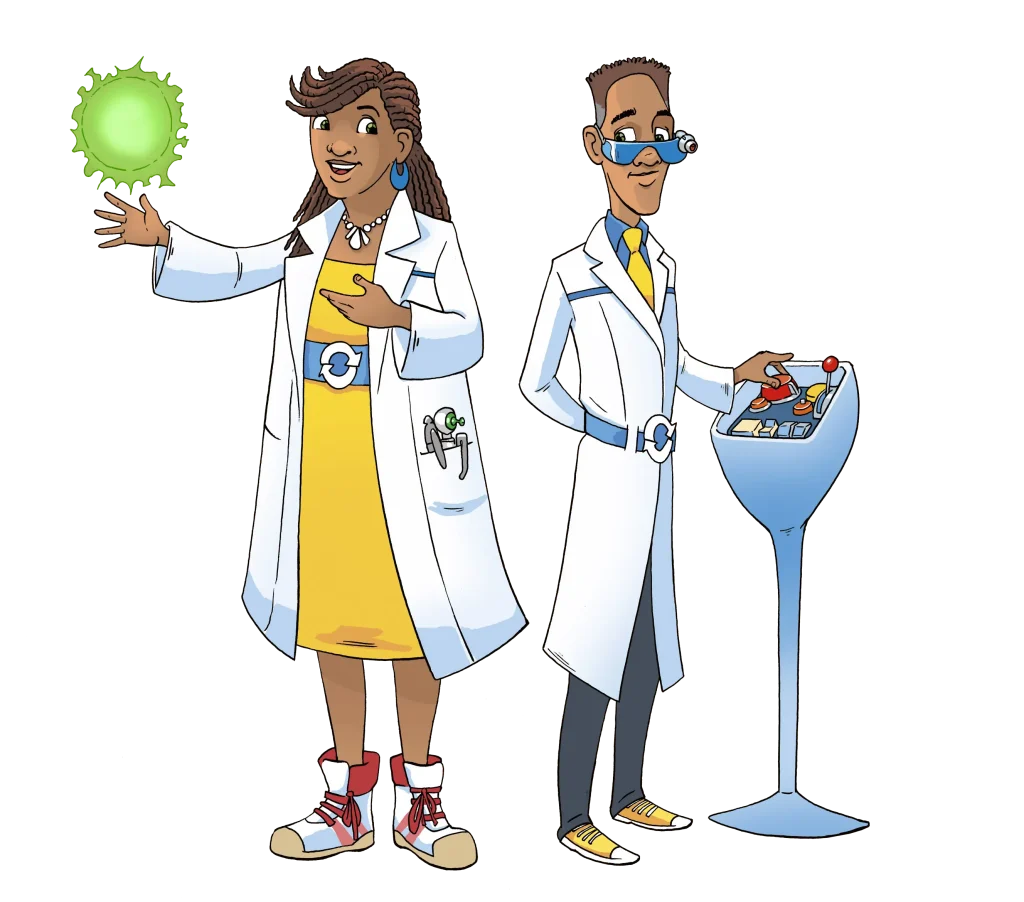
Using our Earth Steward Characters For teaching and learning.
Our characters are designed as Earth Stewards for the protection and saving of our biosphere. They are kind and measured to empower learners to become Earth Stewards too.We have produced lots of printable characters and posters representing each resource so that they can be used for display in the classroom and around the school. he colours we have chosen for these have been gentle so that they may be used in a Reggio style environment too.

Teacher outline for running an Earth Steward's Council
Taking an Holistic approach to Earth Stewardship can embrace all the other initiatives out there.
SDG’s /Rights and Respecting Schools and learning strands like climate and Net Zero
.

Learner speak Earth Steward's Council
The Sustainables and The Renewable teams represent the Earth Resources that need protecting or need to become circular. By becoming CIRCULAR we move away from the TAKE – MAKE – DISPOSE mentality and move to making our earth and energy resources clean and infinite.
Our Earth Stewards are positive and active but not warriors.
The characters are easily identifiable and relatable the Team or individuals can be used .
Useful Resource links


Phenomenon Questions
We have created a range of Big Questions For Depth of Knowledge and Phenomenon questions. These are designed to begin topic discussion and to help establish student led learning and discussion.
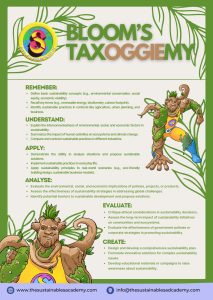
Professional development posters
This link will take you to a range of posters linking educational theory to Sustainability and The Circular Economy.

Triple Wellbeing and Earth Stewardship
Click the orange arrow visit our Triple wellbeing page
In recent times several theorists and researchers have contributed to the development of the concept of Triple Well-Being which was introduced by John Elkington in 1994 via The Triple Bottom Line. This focuses on three dimensions:
People (social well-being),
Planet (environmental well-being),
Profit (economic well-being).
These theorists have often worked within frameworks of sustainability, well-being, and the interconnectedness of environmental, social, and economic systems. While the term “Triple Well-Being” is less commonly associated with specific individuals compared to related of the Triple Bottom Line.
Find below some notable figures and an outline of their contributions:
Amartya Sen- A Nobel laureate economist, Sen is known for his work on capabilities and well-being, particularly in relation to social and economic equity.
- His ideas about expanding individual freedoms and opportunities resonate with the social dimension of well-being.
Jeffrey Sachs- An economist and advocate for the UN Sustainable Development Goals (SDGs), Sachs links well-being to sustainable development in his work.
- His efforts emphasise reducing inequalities while protecting natural systems.
Johan Rockström and Kate Raworth (Planetary Boundaries)- Rockström's work on the Planetary Boundaries framework outlines environmental thresholds within which humanity can safely operate.
- These concepts complement social and economic perspectives to create a balanced well-being model.
Gro Harlem Brundtland- As chair of the Brundtland Commission, she played a significant role in defining sustainable development as meeting the needs of the present without compromising the ability of future generations to meet theirs.
- The 1987 Brundtland Report emphasises the integration of environmental, social, and economic considerations.
Herman Daly- An ecological economist, Daly pioneered concepts of steady-state economics, emphasising the balance between economic activity and environmental health.
- His work focuses on sustainable resource use and fair distribution, aligning with the environmental and economic dimensions of well-being.
Recommended Academic Reading
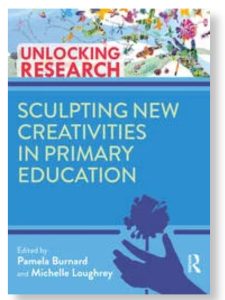
Sculpting new creatives in primary education -
Pamela Burnard
Michelle Loughrey
2022
Our Founder a contributor
Our Founder contributed to this publication .
This book introduces the new term ‘creativities’ with cutting-edge examples of creativities research that has influenced the thinking and work of teachers and school leaders in their practice. Co-edited by one of the leading international experts in creativity and the arts, this book is packed with imaginative ideas and practical classroom suggestions underpinned by theory and research to help teachers become research-informed and research-generating.
Sculpting New Creativities in Primary Education will inspire us, invite us to think, and share ways in which research is informing and enabling a role for new and creative practices in primary education. Each chapter is collaboratively written by an academic and a practicing teacher covering areas such as: creative spaces, intercultural and interdisciplinary creativity, art, wellbeing, mathematics, STEM and leadership creativities. It importantly highlights the need to inspire, shape and unfold change-making practices that (re-)invigorate, (re-)empower, and (re-)position primary education practice.
Drawing from projects originally conducted both in the UK and beyond, this revolutionary book invites teachers, teaching assistants and school leaders to co-create ways to unlock research together as mutually informative ways of authoring change.
Playful Pedagogies: Young Children Learning in International and Multicultural Contexts (World Class Schools)-
Anna Cox & Estelle Tarry
2015
Our Founder a contributor
In the 21st century what the future holds for young learners is unclear, what is clear is that they need to be confident, capable and resilient. As wider communication about education is increasing, there is a developing understanding that children in settings across the globe learn in the same ways and have the same needs. How these are best met demands reflection and effective contexts for early learning reflect the needs and demands of the communities they serve. This book considers international and multicultural learning environments from both theoretical and practical perspectives. It is written by specialists in early years education in the UK and in international contexts, all of whom have a passion for young children’s learning. The theoretical perspectives are supported by eight case studies, from Uganda, Indonesia, Mexico, Qatar, Netherlands, Italy, the United Kingdom and Romania.
Earthwards
Katharine Burke
2024
Earthwards shifts the lens from using nature as a throwaway object to understanding nature as a living organism. This crucial paradigm shift comes through peak experiences of nature. The educator’s job is both to create the conditions for such transformative ecological experiences and then to bring out the observations, feelings, thoughts and questions of students. Educators can use innovative action research to engage with students in a variety of settings – including classrooms, clubs, volunteer groups, outdoors, gardens, forest experiences, camping and hiking. Sharing these learning stories helps build the culture of a real eco-school. Each chapter includes the story of practical learning projects from primary through secondary school; ecological principles, a reflection section for educators, a ‘curriculum connections’ section to bring those principles into practice, and suggestions for multiple age groups. Helpful resources, a comprehensive bibliography, index and sharing website offer further help to educators.
Environomics - How the Green Economy is Transforming your World
Dharshini David
2024
‘Opens our eyes to the everyday contributions all of us make to how the world is changing.’ Tim Marshall, author of Prisoners of Geography
‘A much needed blend of optimism and realism’ Brett Christophers, author of The Price is Wrong: Why Capitalism Won’t Save the Planet
Why might an orangutan care which toothpaste you choose? What does your mobile phone have to do with wind turbines? And can your morning coffee really power a bus?
Economics affects every aspect of our lives, from the clothes on our backs to the bread on our tables and the fuel in our cars. And there are huge changes afoot as the global green revolution sweeps across the globe.
In this vibrant and eye-opening book, economist and broadcaster Dharshini David follows the course of an average day – from the moment we flick on the light in the morning – to reveal the green changes that are already taking place in every aspect of our world. Exploring industries such as energy, food, fashion, technology, manufacturing and finance, she asks what is happening, how quickly, who is driving it all – and what it means for us. Ranging from crucial issues such as sustainability and corporate greenwashing, to global flashpoints such as industrialisation and trade wars, she shows how even the smallest details in our day are part of a much bigger story about where our world is heading.
If you’ve ever wondered what green issues really mean for your day-to-day life, this book is for you.
A Teacher's Guide to The Circular Economy
Robert C Brears
2023
In a world increasingly impacted by climate change and resource depletion, shifting to a circular economy is not just a viable solution but a vital necessity. “A Teacher’s Guide to the Circular Economy” is your essential roadmap to teaching this critical subject.
This comprehensive guide explores the concept of a circular economy, an economic system aimed at minimizing waste and making the most of our resources. It breaks down complex topics into digestible sections, with clear explanations and engaging activities, allowing you to effectively educate the next generation about this sustainable alternative.
From understanding the key principles and benefits of a circular economy to the role of governments and businesses, this book covers it all. You’ll find a wealth of classroom activities, discussions, experiments, and multimedia resources designed to make learning interactive and fun. Also included are effective teaching strategies, assessment tools, and real-world applications to help students grasp the subject.
Immerse your students in interdisciplinary learning, and empower them to be catalysts of change towards a sustainable, circular future. Make “A Teacher’s Guide to the Circular Economy” your go-to resource for teaching this critical subject today.
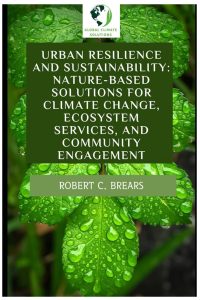
Urban Resilience and Sustainability. Nature based solutions for climate change
Robert C Brears
2024
“Urban Resilience and Sustainability: Nature-Based Solutions for Climate Change, Ecosystem Services, and Community Engagement” is a pivotal guide for anyone striving to align with the global shift towards a more sustainable future. Delving into the heart of contemporary environmental challenges, this book offers actionable Nature-Based Solutions (NBS) that foster urban resilience. From combating climate change to enhancing ecosystem services, the pages within unfold a roadmap of strategies encompassing innovative design, policy integration, community engagement, and more. Explore a myriad of case studies that provide real-world insights, lessons learned, and inspiration for future design strategies. Whether you’re an urban planner, policymaker, researcher, or engaged citizen, this book equips you with the knowledge and tools needed to forge a greener, more resilient tomorrow. Join the movement and uncover the boundless potential of NBS in transforming our urban landscapes.
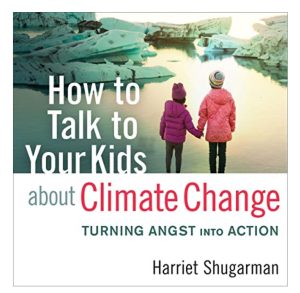
How to Talk to Your Kids about Climate Change
Harriet Shugarman
2020
Building grit and hope in the face of the climate emergency
With catastrophic global warming already baked into the climate system, today’s children face a future entirely unlike that of their parents. Yet how can we maintain hope and make a difference in the face of overwhelming evidence of the climate crisis?
Help is at hand. Written by Harriet Shugarman – the Climate Mama and trusted advisor to parents – How to Talk to Your Kids About Climate Change provides tools and strategies for parents to explain the climate emergency to their children and galvanize positive action. Coverage includes:
- The unvarnished realities of the climate emergency, where we are at, and how we got here
- Strategies for talking to kids of different ages about the climate crisis, including advice from engaged parents on the ground
- How to maintain our own hope and that of our children
- A list of practical actions families can take to tackle the climate change crisis
- Ideas for helping children follow their passions in pursuit of a livable, just, and sustainable world.
A lifeline for parents who are feeling overwhelmed with fear and grief, this book provides both hope and practical ways to engage children in pursuit of a better world that is still possible.
AWARDS
- SILVER | 2020 Nautilus Book Awards: Parenting & Family
- SILVER | 2020 Benjamin Franklin Awards – Parenting & Family
- FINALIST | 2020 Foreword INDIES: Family & Relationships
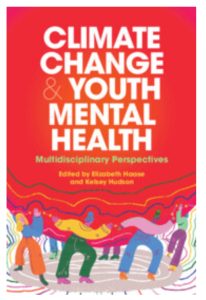
Climate Change and Youth Mental Health
Elizabeth Haas and Kelsey Hudson
2024
Climate change is the biggest threat of our century, one that will impact every aspect of children’s lives: their physical, emotional, moral, financial, and social health and well-being. The relationship between the climate crisis and mental health in young people is therefore by definition multi-disciplinary and multi-cultural, requiring multiple perspectives on how to understand and guide younger generations. This book provides a unique synthesis of those perspectives – the science, psychology, and social forces that can be brought to bear on supporting young people’s psychological well-being. No matter the setting in which an adult may interact with younger people, this book provides the intellectual rigor and tools to ensure those interactions are as helpful and supportive as they can be.
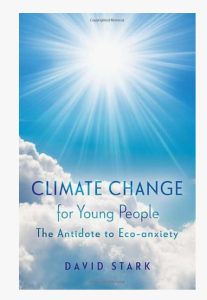
Climate Change for Young People . The Antidote for Eco Anxiety
David Stark
2022
David Stark could not find a book which explained climate change and related energy policy in appropriate detail without being patronising and alarmist so after seven years of research he wrote one himself.
He believes that the contagion circulating through young people of the 21st century, eco-anxiety has spread because the agenda was set by activism where rational and informed debate is precluded. With this comprehensive – but entirely accessible – guide to climate change, debate and the healing process can now start. We can all begin to understand why efforts to date to ‘save the planet’ have hurt the economies of Western democracies and placed our energy and manufacturing security in the hands of autocracies.
This book discusses the different arguments that are often heard in documentaries and news reports but breaks them down with facts and empirical scientific evidence, cutting through the hyperbole to see whether they are actually the cause for panic that we’ve been told they are and whether the solutions being proposed will really help. The current energy crisis suggests that the cure is worse than the disease.

Sustainability careers: Pathways to a Greener Future
Robert C Brears
2024
Sustainability Careers: Pathways to a Greener Future is your essential guide to navigating the growing field of green jobs and building a successful, impactful career in sustainability. Whether you’re just starting out or looking to advance in the field, this comprehensive book provides insights into diverse career paths, from renewable energy and sustainable agriculture to corporate social responsibility and environmental policy. You’ll explore educational pathways, including degrees, certifications, and skills development, and learn strategies for landing your dream job, building a strong professional network, and advancing your career. With a focus on the future of sustainability, including emerging trends, technologies, and global opportunities, this guide equips you with the tools and knowledge needed to thrive in a rapidly evolving industry. Sustainability Careers: Pathways to a Greener Future is the ultimate resource for anyone passionate about making a positive impact on the planet while building a fulfilling and rewarding career.
Teaching for Tomorrow : A comprehensive guide for educators on Climate Resilience and adaptation Strategies
Robert C Brears
2023
Unlock the potential for transformative climate education in your school with “Teaching for Tomorrow: A Comprehensive Guide for Educators on Climate Resilience and Adaptation Strategies.” This comprehensive guide offers actionable steps, practical lesson plans, and resources to help educators weave climate resilience and sustainability into the fabric of their teaching. Whether you’re an elementary teacher or a high-school science instructor, this book equips you with the knowledge to inspire the next generation of eco-conscious citizens. Dive into interactive modules, case studies, and real-life examples that make the complex issue of climate change approachable and engaging. Your road to effective climate education starts here!
Ultimate Teacher's Guide to Food Waste Management
Robert C Brears
Discover the “Ultimate Teacher’s Guide to Food Waste Management,” a comprehensive resource designed to empower educators with the knowledge and tools needed to tackle food waste effectively in schools. This guide provides a holistic approach to reducing food waste, covering everything from integrating food waste topics into the curriculum and implementing practical classroom activities to launching school-wide initiatives and engaging the community.
Learn how to weave food waste education into various subjects, making the topic relevant and engaging for students. Explore hands-on activities like composting projects and growing food in the classroom, which not only teach valuable lessons about sustainability but also provide practical skills students can use in their everyday lives.
The guide also delves into school-wide programs, including conducting cafeteria waste audits and establishing food sharing initiatives. These strategies help schools significantly reduce their food waste footprint while fostering a culture of sustainability among students and staff.
Stay informed about the latest trends and technologies in food waste management, and learn how to set measurable goals and track progress to ensure lasting impact. Empower your students to become sustainability champions who lead by example and inspire others in their community.
Perfect for teachers, school administrators, and sustainability advocates, this guide offers actionable strategies and insights to create a culture of environmental stewardship within your school and community. With the “Ultimate Teacher’s Guide to Food Waste Management,” you’ll have the essential resource to foster a greener future and make a significant impact on reducing food waste.

The outdoor Learning Almanac 2025
Discover a year of outdoor learning with the Outdoor Learning Almanac! This beautifully crafted guide offers families and educators monthly activities, recipes, and lessons designed to inspire a deeper connection with nature. Created by Carol Murdoch, Director of Love Outdoor Learning, this almanac draws on her years of experience as a Forest School Leader and teacher.
Children as Change Makers
How can we help children make a difference, allowing them to shape their communities, locally and globally? Drawing on a rich blend of academic research and case studies, Alison Body critically examines societal structures, including education, communities and cultural narratives, that shape children’s understanding of active, philanthropic citizenship.


Education and Learning For Sustainable Futures
T
