Page Contents
- Trilogy Wellbeing
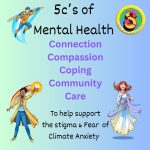
- The 5cs of Mental Health applies to climate Anxiety
- Indigenous Cultures
- FolkLore
- Hope and Harmony Resources
The Origins of Trilogy Wellbeing
.The concept of Trilogy Well-Being doesn’t have a single identified creator; rather, it is an evolution of sustainability principles aligned with frameworks like the Triple Bottom Line introduced by John Elkington in 1994.
The Triple Bottom Line focuses on three dimensions:
People (social well-being),
Planet (environmental well-being),
Profit (economic well-being).
Over time, educators, researchers, and organisations have adapted these ideas into “Threefold Well-Being,” framing it in terms of integrated human and ecological health for sustainable development. We use the term Trilogy wellbeing
Trilogy wellbeing explained

Trilogy Well-Being is the integrated approach to sustainability where we emphasise the interconnectedness of environmental, social, and economic health. It aligns closely with the principles of sustainable development and the UN Sustainable Development Goals (SDGs), making it a valuable framework for educators to incorporate into their teaching.

Environmental Well-Being
Focus: Protecting and regenerating natural ecosystems, addressing climate change, and conserving biodiversity.
Key Points:
Promote sustainable use of resources (e.g., water, energy, soil).
Support ecosystems and address issues like deforestation, pollution, and habitat loss.
Encourage learners to understand and adopt eco-friendly practices. Also encouraging a connectedness to nature and the three elements of our biosphere, Air, Water ,Earth.
Social Well-Being
Focus: Building equitable, inclusive, and resilient societies where all individuals thrive.
Key Points:
Advocate for equality, diversity, and inclusion in all forms.
Emphasise the importance of health, education, and access to resources.
Strengthen community bonds and social cohesion. This additional means connecting with our Earth, Culture and community.
Economic Well-Being
Focus: Creating sustainable economic systems that balance growth with the planet’s finite resources.
Key Points:
Promote sustainable production and consumption patterns (e.g., the circular economy).
Encourage responsible business practices and ethical trade.
Highlight the importance of green jobs and skills for a sustainable future. The realism of an economic driven society whilst protecting our earth.
Reframing the 5 C’s for Climate Mental Health Awareness
Supporting young people through climate anxiety and emotional wellbeing
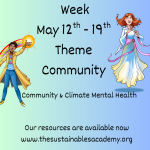
Climate change is not just an environmental issue—it deeply affects our mental and emotional wellbeing. From eco-anxiety to feelings of powerlessness, many people, especially young people, are experiencing a rise in climate-related stress. As we approach Mental Health Awareness Week (12–18 May 2025), themed “Community”, it’s important to reframe our understanding of mental health through the lens of climate mental health.
Connection
Feeling overwhelmed by climate change can lead to isolation. Reconnect with people, nature, and shared purpose. Knowing you are not alone can ease anxiety and build hope.
Compassion
Be kind to yourself and others as we process difficult emotions. Climate emotions are real and valid. Compassion helps reduce shame and creates space for healing.
Coping
Develop healthy strategies to manage worry—talk about how you feel, take breaks from distressing news, get active outdoors, or focus on small, positive climate actions.
Community
Engage with others in climate-positive communities, youth groups, or local projects. Shared action brings support and empowerment, which can counteract helplessness.
Care
Prioritise mental wellbeing—whether that’s seeking help, resting, creating art, or spending time in nature. Self-care is not selfish, it’s survival and strength.
Why This Matters
Climate change can trigger real mental health issues like anxiety, disrupted sleep, low mood, and even trauma responses. These impacts might come suddenly or grow over time. By promoting open conversations and reducing the stigma around climate emotions, we can support a generation to act with hope rather than fear.
Indigenous Culture and Folklore
Indigenous culture and folklore are vital to our mental health, well-being, and sustainability in teaching and learning, as they offer deep-rooted wisdom that fosters a sense of belonging, resilience, and connection to the natural world. These traditions pass down intergenerational knowledge about living in harmony with nature, respecting ecosystems, and valuing community over individualism—principles essential for sustainability and the circular economy. Storytelling, a cornerstone of indigenous and folk traditions, nurtures emotional intelligence, empathy, and a holistic understanding of our place within the web of life. Engaging with these narratives in education helps learners develop a sense of identity, cultural appreciation, and mindfulness, while reinforcing the importance of stewardship and regenerative practices. By integrating indigenous knowledge into learning, we not only honour diverse perspectives but also cultivate a deeper, more intrinsic motivation to care for our planet and each other, ultimately enhancing both personal well-being and collective sustainability.

Strengthening Connection to Nature and Sustainability
Indigenous cultures have long-standing wisdom about living in harmony with the environment, emphasising respect for natural resources, biodiversity, and sustainable practices. Teaching these traditions helps learners understand the importance of ecological balance, fostering a deeper commitment to sustainability and the circular economy.

Encouraging Cultural Respect and Inclusion
Teaching indigenous culture and folklore fosters appreciation for diverse perspectives, traditions, and ways of knowing. This promotes inclusivity, respect for different worldviews, and decolonisation of education, ensuring that indigenous voices and wisdom are recognised and valued in learning spaces.

Promoting Mental Health and Well-Being
.Indigenous storytelling, rituals, and practices often focus on interconnectedness, mindfulness, and resilience, which are essential for mental well-being. By embracing these teachings, learners develop a sense of belonging, purpose, and emotional strength, helping them cope with modern challenges like climate anxiety and disconnection from nature.

Enhancing Holistic and Experiential Learning
. Indigenous education is often hands-on, experiential, and rooted in storytelling, making learning more engaging and meaningful. These approaches encourage critical thinking, problem-solving, and creativity while strengthening learners’ understanding of history, ethics, and their role in a shared global future.
Indigenous Culture
Ancient Cultures
from the past
These cultures still influence our life and landscape such as the Celts and the Picts
Our new storyteller from the Indian Himalayas
Visit Jibmat’s website to read his retelling of stories from the Oldtimers
Embracing Culture and Folklore & Integrating Trilogy
Well-Being in Learning rationale
We aim to embed these principles into everyday learning by using interdisciplinary and inquiry-based approaches.
Through
Our Links to Curriculum Areas:
We show how triple well-being connects to subjects like science, geography, social studies, and citizenship.
Including case studies and activities related to local and global sustainability challenges

Why is Trilogy Well-Being Important for us as Educators?
Integrating triple well-being into our teaching and learning practices, we as educators can inspire and prepare learners to contribute positively to a sustainable future
- Empower Future Changemakers: Prepares learners to think critically and act responsibly in their communities and beyond.
- Encourage Resilience: Builds capacity to address and adapt to challenges such as climate change, inequality, and resource scarcity.
- Support SDGs: Aligns teaching with global sustainability goals, making learning more relevant and impactful.
Hope and Harmony Resources
Lower Primary
Upper Primary
Reflection Cards for Climate Emotions: Hope and Harmony
Upper Primary | Set of 12 Cards
Each card is designed to prompt thoughtful reflection, creative expression, or meaningful discussion,
focusing on the emotional themes of hope and harmony in relation to climate change and sustainability.
Hope Reflection Cards (6 Cards)
Harmony Reflection Cards (6 Cards)
Middle to Highschool
Folklore Resources
Information cards to support Reflections Resouces
Lower Primary/ Elementary
Upper Primary/Elementary
These cards aim to inspire optimism and proactive thinking about the environment, empowering Upper Primary elementary learners with realistic and positive actions to create a sustainable future.
Middle /
High School
Postive actions in Environment Cards Each card introduces a positive solution for environmental care, focusing on empowering middle to high school learners to take action while fostering hope and harmony in relation to nature and sustainable Earth resource use.
e.
Support Resources
Climate mental Health Curriculum and Tools