




Climate Mental Health
Free mental health & climate mental health resources for children and adolescents
In a world where the challenges of climate change loom large, the mental health of our younger generation is of immediate focus. As children and adolescents grapple with the complexities of climate change and its potential implications for their future, it’s crucial to provide them with the necessary support and resources to navigate these feelings effectively.
In the face of climate change and its profound impact on mental health, initiatives like our mental health awareness with a focus on Earth Stewards play a vital role in equipping children and adolescents with the knowledge, skills, and support needed to navigate these challenges with resilience and optimism. By fostering environmental consciousness, reducing climate anxiety, and promoting holistic well-being, the concept of Earth Stewards strives to nurture a generation of young people committed to safeguarding the planet and building a brighter tomorrow for all.
Contents
as you scroll this page you will find ...
Our Research Partner link
Key Components of Earth Stewards
Climate Mental Health Curriculum
Children’s Mental Health Days
Mindfulness and Environmental Earth Stewardship
The Flourishables Team
Trilogy Wellbeing
Mantle of Expert Inspired Role play
Eco Emotions
Gallery of Books
Climate Mental Health Teaching Resources
Climate anxiety Action Ideas
External Providers
Research Partner with Imperial College London
We are delighted to have been invited to join this project
Climate Mental Health Resources
Teaching and Learning and Curriculum
Learning Starters
Upper Primary to High School
Mental Health and Climate Anxiety supported through UN resources
The UN Empowering Climate Mental Health
through robust strategies
UNCRC- Rights of The Child
Sustainable Development Goals
UN Biodiversity Tagets
The Global frameworks of the Sustainable Development Goals (SDGs), the United Nations Convention on the Rights of the Child (UNCRC), and the UN Biodiversity Targets provide a powerful foundation for addressing climate mental health and anxiety. The SDGs promote a vision of a fair, sustainable future where urgent action on climate change (Goal 13),
quality education (Goal 4),
and
good health and wellbeing (Goal 3)
are all interconnected. The UNCRC upholds every child’s right to be heard, to access education, and to live in a safe, healthy environment—rights that become especially important as children face uncertainty about the planet’s future. Meanwhile, the UN Biodiversity Targets encourage protection of the natural world, recognising that nature is not only essential for ecological balance but also for human emotional resilience and joy. Together, these frameworks support education systems and communities to respond holistically—offering children knowledge, hope, and agency to cope with climate anxiety and take positive action.
Climate Mental Health and Earth Stewardship

Earth Stewards: Fostering Environmental Consciousness
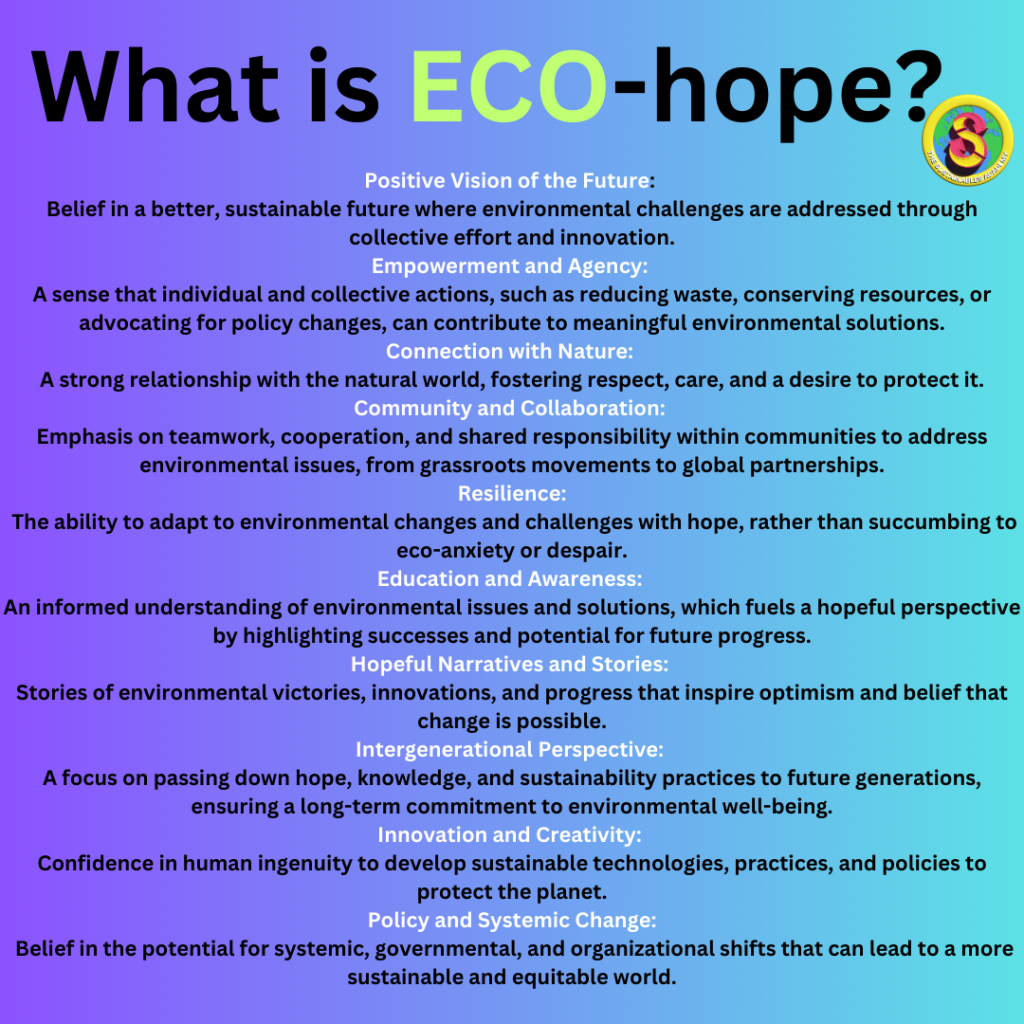
A pioneering initiative aimed at empowering children and young people aged 3 to 18 to become stewards of the Earth while also addressing their mental health needs. By merging education on climate change/ Sustainability and The Circular Economy with mental health support, We endeavour to cultivate a generation of compassionate, informed, and resilient individuals equipped to tackle the environmental challenges of tomorrow.
Reducing Climate Anxiety: A Vital Goal
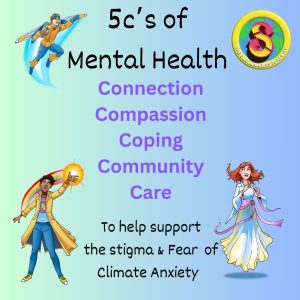
Central to becoming an Earth Steward is the recognition of the profound impact of climate anxiety on children and young people. Climate anxiety, characterised by feelings of fear, helplessness, and overwhelm in response to the climate crisis, can significantly affect young minds and well-being. Through a holistic approach, promoting Earth Stewards aims to alleviate climate anxiety by fostering a greater understanding of our ability to make real change.
Key Components of Earth Stewards:
Climate Education
Engaging and age-appropriate educational materials and activities designed to increase understanding of climate change, environmental conservation, and sustainable practices.
Mental Health Resources
Access to a range of free mental health resources, including mindfulness exercises, and coping mechanisms and free and open talk.
Community Support
A supportive community where children share experiences, and find solidarity in facing the challenges of climate change and mental health together.
Empowerment Through Action
Opportunities for teachers to plan for hands-on involvement in environmental conservation efforts, advocacy campaigns, and community projects, empowering young individuals to make a tangible difference in protecting the planet and shaping a sustainable future.
See Our Climate Mental Health Curriculum
arranged in phases below

We have arranged in the phase levels below – please view
also see our link to our outdoor learning page – remember all our 12 pathways for sustainability and circular economy have an outdoor learning strand
New!
KS1 - Infant Level 1
These resources explore sustainability in a variety of national curricular, focusing on its natural resources, environmental policies, and local initiatives. It aims to deepen understanding of global sustainable practices and encourage participation in ecological conservation. Developing Climate Mental Health through the development of Earth Stewardship.
New!
KS2 - Junior Level 2
These resources delve into a learning approach to a climate mental health wellbeing. Including examining strategies for minimising waste and maximising resource efficiency. It highlights local success stories and policies driving circular practices, aiming to inspire participants to contribute actively to a global sustainable economic transformation, to become Earth Stewards.
New!
KS3 - Middle School
This curriculum models learners professional skills, providing learning in wellbeing with a focus on sustainability and leadership. It aims to cultivate wellbeing and self reflection on our climate and the future we all create. It allows critical thinking about how we can be pro active Earth Stewards.
So Many Mental Health Awareness Weeks and Days Globally
Harmony has a list for you

List of Mental Health Days
Mental Health Observance Dates – 2025
R U OK? Day (Australia)
Date: Thursday, 11 September 2025New Zealand Mental Health Awareness Week (expected)
Date: October 6th -12th2025Mental Health Awareness Week – United Kingdom (including Scotland)
Date: Monday, 12 May – Sunday, 18 May 2025
Theme: CommunityMental Health Week – Canada
Date: Monday, 5 May – Sunday, 11 May 2025Mental Health Awareness Month – United States
Date: Entire month of May 2025European Mental Health Week
Date: Monday, 19 May – Sunday, 25 May 2025Mental Health Week – Australia
Date: Monday, 6 October – Sunday, 12 October 2025World Mental Health Day (Global)
Date: Friday, 10 October 2025
Mental Health Celebration Action Days
Malesuada fames ac turpis egestas integer. Fermentum iaculis eu non diam phasellus vestibulum lorem sed risus.
Children's Mental Health Week UK
Hope and Harmony help take you on a great journey .
Theme for 2025
Know Yourself, Grow Yourself
World Mental Health Week UK
Again Hope and Harmony take you on a Climate Mental Heath Journey
Theme 2025
Visit this great resource
Mindfulness
With Environmental
and Earth Stewardship linked to UK
Earth stewardship and environmental mindfulness focus on fostering a compassionate and purposeful relationship with the planet, which can significantly benefit mental health, particularly in the context of climate-related anxiety. Earth stewardship in therapy encourages individuals to actively care for and protect natural resources, helping them connect their actions to a larger sense of purpose and contribution. Environmental mindfulness, meanwhile, promotes a reflective awareness of one’s daily impact on the environment, guiding learners to make thoughtful, sustainable choices. Practicing these approaches can provide grounding and reduce feelings of eco-anxiety by shifting focus from helplessness to intentional, positive action. This process fosters a sense of agency, encourages hope, and nurtures resilience, empowering individuals to respond to environmental challenges in a way that enhances both personal well-being and climate mental health. By reconnecting with nature, individuals can find healing and balance, while cultivating a mindset of proactive care and stewardship that supports both the planet and their own mental resilience.
Meet The Flouishables
Harmony
Bio: Embodies balance between people and nature, reminding learners of interconnection.
Pathway Link: Linked to balance in ecosystems and wellbeing.
Climate Anxiety Connection: Helps learners cope with the stress of feeling “out of sync” with the planet by showing how small actions can restore balance.
Hope
Bio: Brings optimism and belief in a brighter future, guiding learners to see that positive change is possible.
Pathway Link: Anchored in climate hope and optimism within mental health and wellbeing.
Climate Anxiety Connection: Counters despair and eco-doom by focusing attention on solutions and future possibilities.
Calm
Bio: Brings grounding, mindfulness, and stillness, helping learners feel safe during overwhelming times.
Pathway Link: Supports emotional regulation and self-care.
Climate Anxiety Connection: Offers strategies (breathing, mindfulness) to reduce restlessness and panic caused by climate anxiety.
Serenity
Bio: Represents peace and restorative quiet, often linked to oceans, rivers, or forests.
Pathway Link: Promotes eco-therapeutic practices through connectedness to nature.
Climate Anxiety Connection: Calms fear of the unknown and “future shock” by showing that nature restores inner peace.
Solace
Bio: A comfort-giver who reminds learners of the power of community and shared support.
Pathway Link: Linked to social connectedness and equity.
Climate Anxiety Connection: Counteracts isolation by reminding learners they are not alone in their concerns.
Courage
Bio: Encourages bravery and action, helping learners channel fear into empowerment.
Pathway Link: Rooted in agency and empowerment.
Climate Anxiety Connection: Helps learners overcome silence caused by eco-anxiety, giving them confidence to speak up and take action.
Balance
Bio: Teaches harmony between rest and action, individual needs and collective care.
Pathway Link: Supports mental health strategies for sustainable living.
Climate Anxiety Connection: Eases guilt and pressure by reminding learners they don’t need to do everything perfectly
Radiance
Bio: Shines with positivity, laughter, and creativity, lifting others’ spirits.
Pathway Link: Connects to optimism and climate joy.
Climate Anxiety Connection: Lightens the weight of eco-doom by showing that joy and humour are part of resilience.
Kindred
Bio: Represents empathy, friendship, and kinship with humans and the more-than-human world.
Pathway Link: Anchored in equity, empathy, and social justice.
Climate Anxiety Connection: Tackles loneliness and disconnection by fostering bonds of care and solidarity
Opti
Bio: Offers persistence and patience, teaching that big change grows from consistent small steps.
Pathway Link: Linked to adaptation and resilience skills.
Climate Anxiety Connection: Counters the anxiety of urgency (“we’re running out of time”) by modelling steady progress.
Lumen
Bio: A guide of light and clarity, showing pathways forward through knowledge.
Pathway Link: Supports climate literacy and critical thinking.
Climate Anxiety Connection: Eases fear born of confusion or misinformation by providing clarity and understanding.
Bloom
Bio: Symbolises growth, renewal, and cycles of change, inspiring regeneration.
Pathway Link: Connects to growth mindset and regenerative thinking.
Climate Anxiety Connection: Counters feelings of stagnation and helplessness by showing how small hopeful actions can blossom into transformation.
Earth Stewardship
The Flourishables
Trilogy Wellbeing
Our Trilogy Wellbeing is a holistic approach that integrates environmental, social, and economic health to achieve sustainability for people and the planet. The Theorist behind this approach are introduced as this developed from John Elkington’s Theory of the Triple Bottom line. .
Earth Stewardship emphasises the responsibility to care for and protect Earth’s resources, fostering actions that preserve ecosystems and promote sustainable living. Together, these frameworks empower individuals and communities to create a balanced, resilient future through thoughtful and equitable decision-making
Applying the Dorothy Heathcote 'Mantle of Expert'.
Please visit our Scenarios
Dorothy Heathcote’s Mantle of the Expert (MoE) is a teaching method where learners take on expert roles in a fictional scenario, working collaboratively to solve real-world problems with the teacher acting as a guide. This approach supports climate mental health for upper primary/elementary learners by empowering them to address environmental issues through active roles, fostering resilience, and encouraging practical action.
In MoE scenarios, learners gain a sense of control and agency, learning practical skills while working through obstacles, which builds resilience. By fostering collective responsibility, MoE helps learners feel less isolated in facing climate issues. Activities focus on solutions rather than fear, encouraging positive climate actions and giving learners a constructive outlook. Reflection sessions also help learners process emotions, reinforcing a hopeful, proactive mindset essential for engaging with climate challenges.
Eco- Emotions
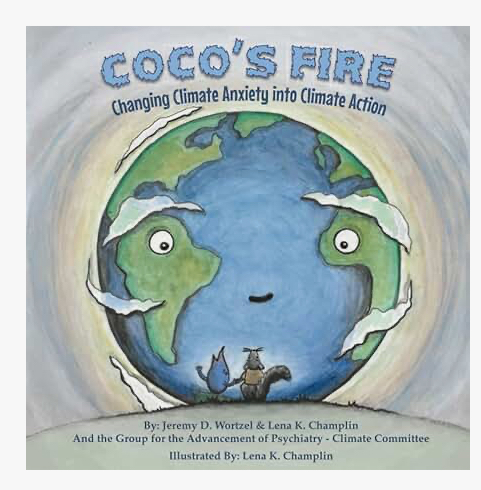
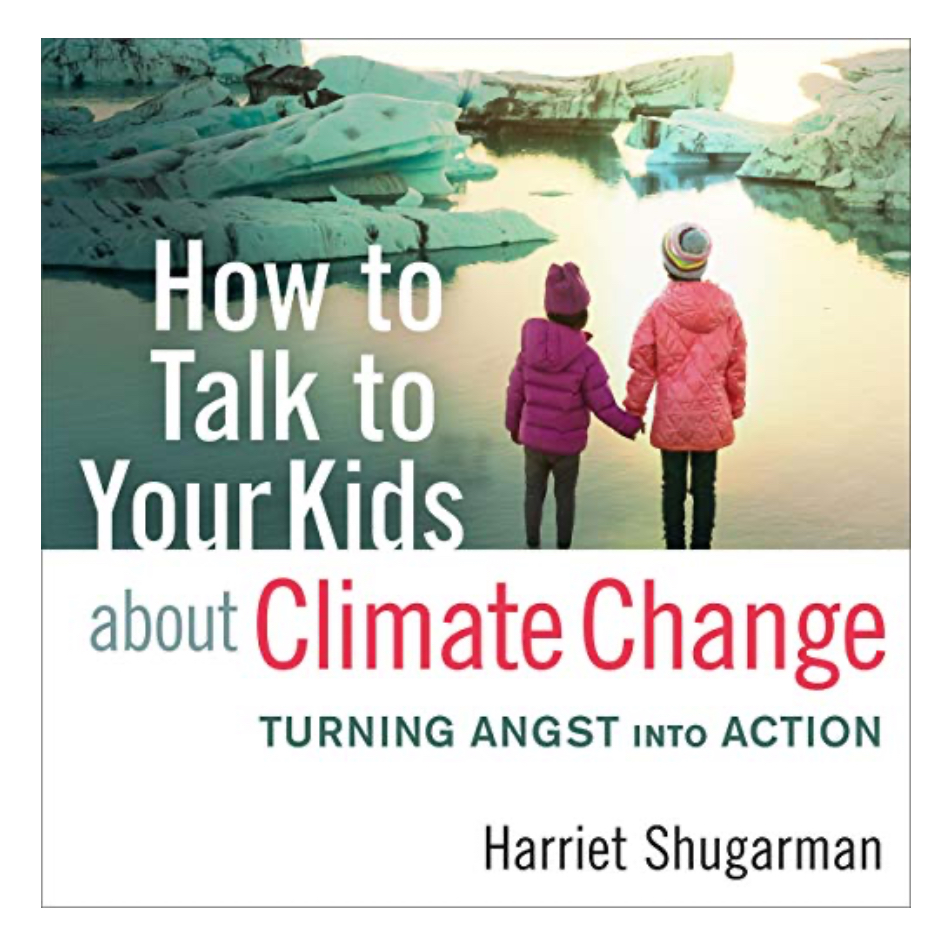
Picture books to support climate mental health
The Last Bear
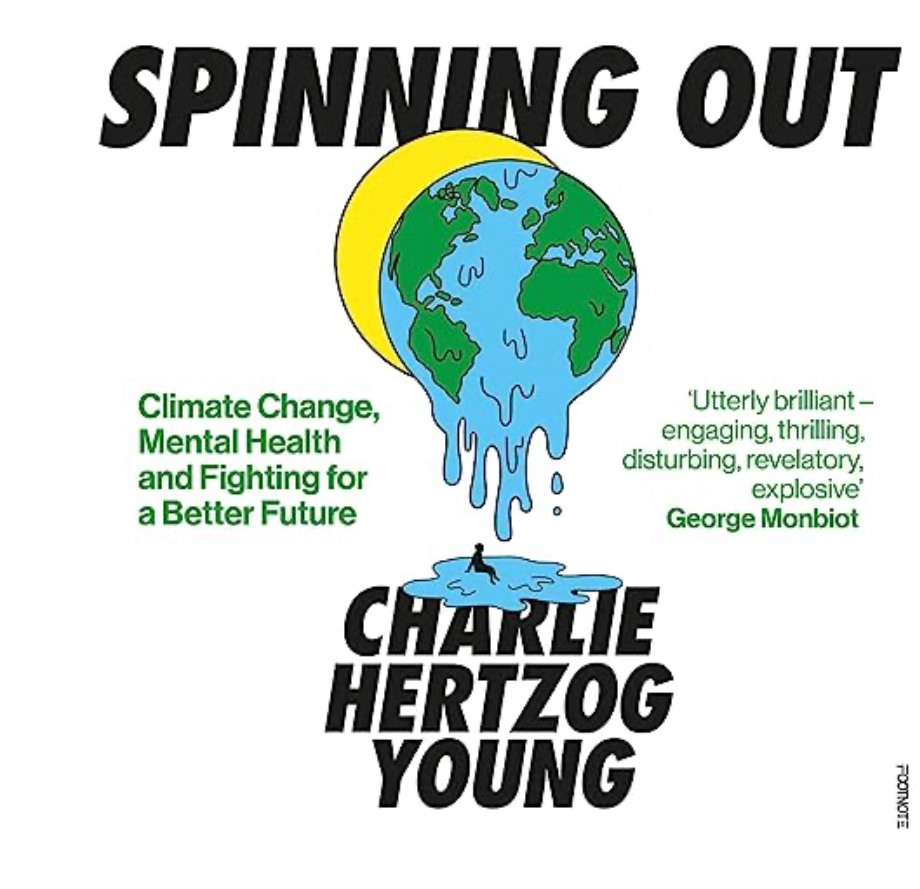
“The Last Bear” by Hannah Gold – A touching story about a young girl who befriends a polar bear on an Arctic island, blending themes of climate change with emotional resilience and the importance of protecting vulnerable species
The Tantrum that Saved the World
“The Tantrum That Saved the World” by Megan Herbert and Michael Mann – A unique story blending activism with personal responsibility, showing how a young girl’s frustrations about climate change lead her to take meaningful action.
The Bear in The Stars
“The Bear in the Stars” by Alexis Snell – This poetic book follows a polar bear as it journeys across the world searching for a new home due to climate change, touching on themes of displacement and hope.
There's a RangTan in My Bedroom
“There’s a Rang-tan in My Bedroom” by James Sellick – A beautifully illustrated book tackling the effects of deforestation and palm oil use, featuring a cheeky orangutan who needs help.
The Tree Lady
“The Tree Lady: The True Story of How One Tree-Loving Woman Changed a City Forever” by H. Joseph Hopkins – The true story of Kate Sessions, a woman who brought trees to San Diego’s desert climate, teaching children about the power of one person’s passion to restore nature.
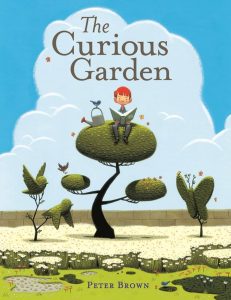
The Curious Garden
“The Curious Garden” by Peter Brown – This beautifully illustrated book tells the story of a boy who transforms a dreary urban environment into a lush, green space by nurturing a small garden. It inspires young readers to see how small actions can make a big difference to the environment.
The Boy Who Harnessed the Wind
“The Boy Who Harnessed the Wind” by William Kamkwamba and Bryan Mealer – Based on a true story, this picture book version follows a boy in Malawi who builds a windmill to bring electricity to his village. It touches on themes of sustainability, innovation, and environmental repair.
Bee and Me
“Bee & Me” by Alison Jay – A visually stunning book about a girl who saves a bee, teaching children about the importance of pollinators in the environment and how small actions can have big ripple effects in helping to repair ecosystems.
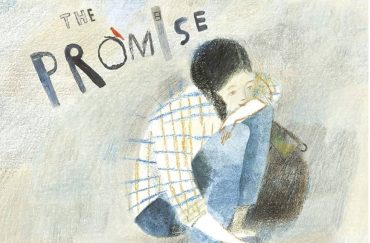
The Promise
“The Promise” by Nicola Davies – A poetic story about a girl who plants trees in a barren city and watches it transform. It teaches young readers about the power of nature in healing both the Earth and the people living on it.
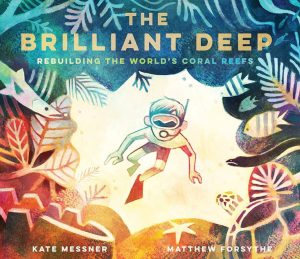
The Brilliant Deep
“The Brilliant Deep: Rebuilding the World’s Coral Reefs” by Kate Messner – A story about Ken Nedimyer, a coral restoration pioneer, this book teaches children about the delicate balance of ecosystems and how dedicated efforts can help repair damaged coral reefs.
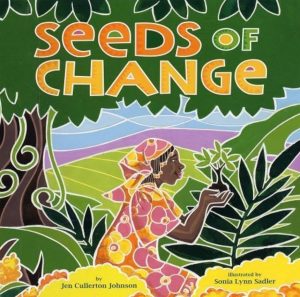
Seeds of Change
“Seeds of Change: Planting a Path to Peace” by Jen Cullerton Johnson – Based on the true story of Wangari Maathai, it showcases her environmental efforts to restore Kenya’s forests and highlights the intersection of environmental and social change
One Plastic bag
“One Plastic Bag: Isatou Ceesay and the Recycling Women of the Gambia” by Miranda Paul – This inspiring story shows how a group of women in Gambia cleaned up their village by recycling plastic bags, offering a powerful message about community-led environmental repair and the circular economy.
Professional reading
Book to come
Book to come
Climate Mental Health Resources
Consolidation in Mental Health Related to Sustainability
Consolidation refers to the process of integrating and solidifying positive mental health habits, sustainable behaviors, and values. In terms of sustainability, it can involve:
Strengthening connections with nature and community, which are proven to enhance mental well-being.
Adopting sustainable lifestyles as part of one’s identity, creating a sense of purpose and alignment with long-term goals.
Emotional resilience in the face of environmental challenges, such as climate change anxiety, by finding constructive ways to contribute to sustainability efforts.
Building a support system that fosters mental health and sustainability—such as joining environmental groups or advocating for eco-friendly policies, reinforcing one’s mental health through a sense of shared purpose.
For example, when individuals find meaning in activities like conservation, recycling, or environmental activism, they experience a consolidation of sustainable behaviours that positively influence their mental health. It fosters a sense of accomplishment and connection to something greater, which can combat feelings of helplessness.
Desolation in Mental Health Related to Sustainability
Desolation refers to feelings of isolation, despair, or hopelessness, often triggered by environmental degradation and concerns about the future. In sustainability, it can manifest as:
Eco-anxiety or climate grief, where individuals feel overwhelmed by the magnitude of environmental crises, leading to mental exhaustion or depression.
Disconnection from nature, which has been linked to a decline in mental well-being. Urbanisation and environmental destruction can contribute to feelings of alienation.
Apathy or fatalism about sustainability efforts, where a person feels that no matter what they do, it won’t make a difference—this sense of powerlessness can affect motivation and engagement with sustainable practices.
Burnout from continuous efforts in sustainability work without seeing immediate results, leading to mental fatigue.
Desolation can severely hinder an individual’s ability to take positive action for the environment, as they may feel mentally and emotionally drained. It highlights the need for mental health support in sustainability efforts to help people cope with environmental anxieties and re-establish hope and purpose.
Resources to help support teaching Climate Mental Health Literacy
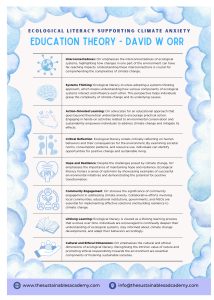
Emotional Literacy Theory
Theory into practice Climate Anxiety-
David .W. Orr
Earth Stewardship Environmental Mindfulness
Aligning the UK Nations Curriculum to Earth Stewardship and Environmental mindfulness
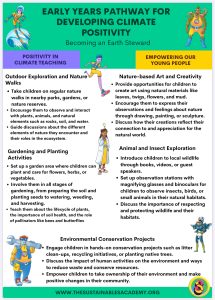
Teaching Earth stewardship mindfulness can inspire learners to care for the planet, think critically about their choices, and participate in the circular economy and sustainability efforts. This mindful approach helps cultivate eco-conscious individuals committed to a balanced, harmonious relationship with the Earth.
External links and providers
Gratitude
Tree
Lower Primary Elementary
Objective: Foster gratitude and positivity about nature.
Materials: Paper, markers, scissors, a branch (or draw a tree on paper).
Steps:
- Learners trace and cut out leaf shapes from paper.
- On each leaf, they write or draw something they appreciate about nature (e.g., sunshine, flowers, birds).
- Attach the leaves to a branch or paper tree using string or tape.
- Display the tree in the classroom and discuss how caring for these gifts helps the Earth.
- Extension: Take learners outdoors to find a real tree they can adopt as their "gratitude tree."
Nature Scavenger Hunt for Positivity
Lower Primary Elementary
Objective: Encourage mindfulness and a sense of wonder.
Materials: Printable scavenger hunt sheet or verbal prompts.
Steps:
- Create a list of nature items learners can observe outside (e.g., a colourful leaf, a buzzing insect, a soft patch of grass).
- Pair learners and have them explore the playground or nearby park to find as many items as they can.
- After the hunt, discuss how these small elements contribute to the environment.
- Extension: End the activity with a "thank you circle" where learners share their favourite discovery.
Miniature Earth Keepers
Lower Primary Elementary
Objective: Give learners a sense of control and responsibility.
Materials: Recycled containers, soil, seeds (e.g., wildflowers, herbs), water.
Steps:
- Learners decorate recycled containers to make small planters.
- Plant seeds together and discuss how taking care of plants helps the Earth.
- Create a "plant care rota" where each learner waters their plant weekly.
- Extension: Add storytelling—each plant becomes the home for a fictional "Earth Steward" character, teaching learners how plants help reduce carbon and support biodiversity.
Story Stones for Climate Positivity
Lower Primary Elementary
Objective: Use storytelling to process emotions and foster solutions.
Materials: Smooth stones, paint or markers.
Steps:
- Learners paint or draw symbols of nature and positive climate actions on stones (e.g., trees, rainbows, recycling symbols).
- Use the stones to create group stories about a world where people take care of nature.
- Share stories and discuss what learners can do daily to help.
- Extension: Build a class display of the story stones to revisit.
Sound Safari and Breathing
Lower Primary Elementary
Objective: Promote mindfulness and relaxation.
Materials: None.
Steps:
- Take learners outdoors and sit quietly for a "sound safari" to listen for natural sounds (e.g., rustling leaves, bird songs).
- Afterward, lead them in slow, deep breathing, imagining they are filling their lungs with fresh air from the trees.
- Discuss how nature helps us feel calm and how we can help it stay healthy.
- Extension: Record the sounds with a device to replay during classroom relaxation sessions
Earth
Art Mandalas
Lower Primary Elementary
Objective: Channel creativity and appreciation for nature.
Materials: Leaves, flowers, pebbles, sticks (collected outside).
Steps:
- Take learners outside to collect natural items (ensuring they’re not damaging the environment).
- Arrange the items into circular "mandalas" in small groups.
- Discuss the beauty and balance in their designs, linking it to the balance we need to protect the Earth.
- Extension: Photograph the mandalas and make a class collage titled "Nature's Balance: Our Responsibility."
Positivity Pebbles
Lower Primary Elementary
Objective: Encourage positive thinking and sharing.
Materials: Smooth pebbles, paint or markers.
Steps:
- Learners decorate pebbles with happy designs or kind messages about nature (e.g., "Be kind to trees!").
- Place the pebbles in the school garden or take them home to inspire others.
- Extension: Learners track where their pebble inspires change by sharing stories.
“I Can”
Action Posters
Lower Primary Elementary
Objective: Empower learners with actionable steps.
Materials: Large paper, crayons, markers.
Steps:
- Discuss simple actions learners can take to help the Earth (e.g., turning off lights, planting flowers).
- Each learner creates a poster showing one action and shares it with the class.
- Display the posters as a "We Can Help the Earth" wall.
- Extension: Introduce the Earth Stewards characters (e.g., Mini, Oggie) to inspire more actions.
Cloud Wishes for the Earth
Lower Primary Elementary
Objective: Encourage mindfulness and positive aspirations for the planet.
Materials: Paper, cotton wool (optional), crayons, markers, tape or string.
Steps:
- Start outdoors by asking learners to lie on the grass and observe the clouds. Encourage them to imagine the clouds carrying their hopes for the Earth (e.g., clean rivers, healthy animals).
- Back in the classroom, learners draw or write their wishes on cloud-shaped paper.
- Decorate the clouds with cotton wool for a tactile element and display them on a "Sky of Hopes" wall.
- Use a group discussion to affirm that each small action helps bring these wishes to life.
- Extension: Create a follow-up activity where learners choose one wish they can actively help achieve (e.g., picking up litter to keep rivers clean).
Earth Steward Challenge
Upper Primary
Objective: Encourage problem-solving and collaboration for Earth Steward solutions.
Materials: Classroom items (paper, tape, recycled materials), printed scenarios.
Steps:
- Present groups with eco-mission scenarios (e.g., "Create a way to reduce water waste at school").
- Groups brainstorm and prototype solutions using the materials provided.
- Each group presents their solution, and the class votes on the most practical idea to implement.
- Extension: Put the winning solution into practice at school.
Kindness Rocks for the Earth
Upper Primary
Objective: Promote creativity and sharing climate-positive messages.
Materials: Smooth rocks, paints or markers, sealant spray (optional).
Steps:
- Groups paint uplifting messages or images about taking care of the Earth on rocks.
- Place the rocks around the schoolyard, local park, or community as "Earth Kindness Messages."
- Discuss how spreading positivity can inspire others to act.
- Extension: Create a class map showing where the rocks are placed and track if they are found or moved.
Climate Positivity Mural
Upper Primary
Objective: Inspire teamwork and hope through art.
Materials: Large paper rolls or cardboard, paints, markers.
Steps:
- In groups, learners brain buzz talk positive actions people can take for the Earth (e.g., planting trees, using solar energy).
- Assign each group a section of a collaborative mural to illustrate their ideas.
- Assemble the mural in the classroom or a school hallway as a "Wall of Climate Hope."
- Extension: Invite other classes to add to the mural over time.
Circular Economy Relay
Upper Primary /Elementary
Objective: Teach about recycling and reusing through active play.
Materials: Recycled items (e.g., bottles, cardboard), bins labeled "Recycle," "Reuse," "Compost."
Steps:
- Set up a relay course with bins at the finish line.
- Divide the class into teams. Each team must decide how to sort items as they race to the bins.
- After the relay, discuss why sorting waste is important and how learners can do this at home.
- Extension: Include tricky items like e-waste and discuss alternative recycling methods.
Earth Stewards Role Play
Upper Primary /Elementary
Objective: Empower learners with creative problem-solving.
Materials: Character cards, props (optional).
Steps:
- Assign groups an Earth issue (e.g., deforestation, plastic pollution) and a related "Earth Guardian" role (e.g., scientist, activist, inventor).
- Groups develop and act out solutions to their issue, using simple props to enhance their performance.
- Hold a class discussion about which solutions could work in real life and how learners can contribute.
- Extension: Record the role-plays and share them as part of a school climate action campaign.
Build a Bug Hotel
Upper Primary /Elementary
Objective: Support biodiversity and teamwork outdoors.
Materials: Recycled materials (e.g., cardboard tubes, bricks, wooden pallets), natural items (sticks, leaves).
Steps:
- Take learners outdoors in teams to collect natural items.
- Build a bug hotel collaboratively, layering materials to create habitats for insects.
- Place the hotel in a school garden or yard and monitor insect visitors over time.
- Extension: Research how insects help the planet and brainstorm other ways to protect them.