


Aqua introduces the challenge, explaining how Green Lake’s water levels have dropped due to a mix of natural and human factors. They guide the learners on a field visit to a nearby water source (pond, creek, or similar), helping them observe water quality, plant health, wildlife presence, and any visible impacts from humans.
Challenge from Aqua: “Let’s observe carefully—every detail could help us understand how to protect Green Lake!”
Aqua teaches learners about the water cycle through interactive outdoor experiments:
- Creating “mini water cycles” in jars to visualize condensation and precipitation.
- Measuring evaporation by placing water in sunny and shady areas.
Aqua explains how the water cycle naturally maintains water in ecosystems and why conserving this cycle is crucial.
- Water Earth Stewards’ Workshop – Crafting Conservation Strategies:
Aqua holds a special workshop where the young Water Guardians brainstorm and create small models of conservation strategies, such as:
- Miniature rain catchers from recycled materials.
- Barriers to prevent runoff and pollution.
- Low-tech filtering devices to reduce contaminants.
- Challenge from Aqua: “We need innovative solutions! Each idea can help protect Green Lake and serve as a model for other places.”
Learners work in teams to present their strategies to Aqua’s “Council” (teacher or peers). Aqua encourages them to explain how each strategy uses scientific principles to save water and sustain life in Green Lake.

Learners reflect on what they’ve learned about water conservation, guided by Aqua’s wisdom. They discuss ways to save water in their own lives, earning “Water Earth Steward ” badges from Aqua as a symbol of their new role in protecting water resources.

Background Story:
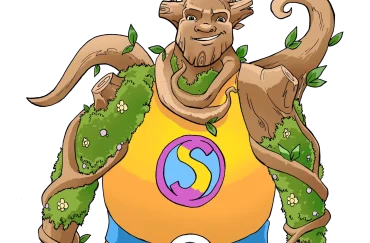
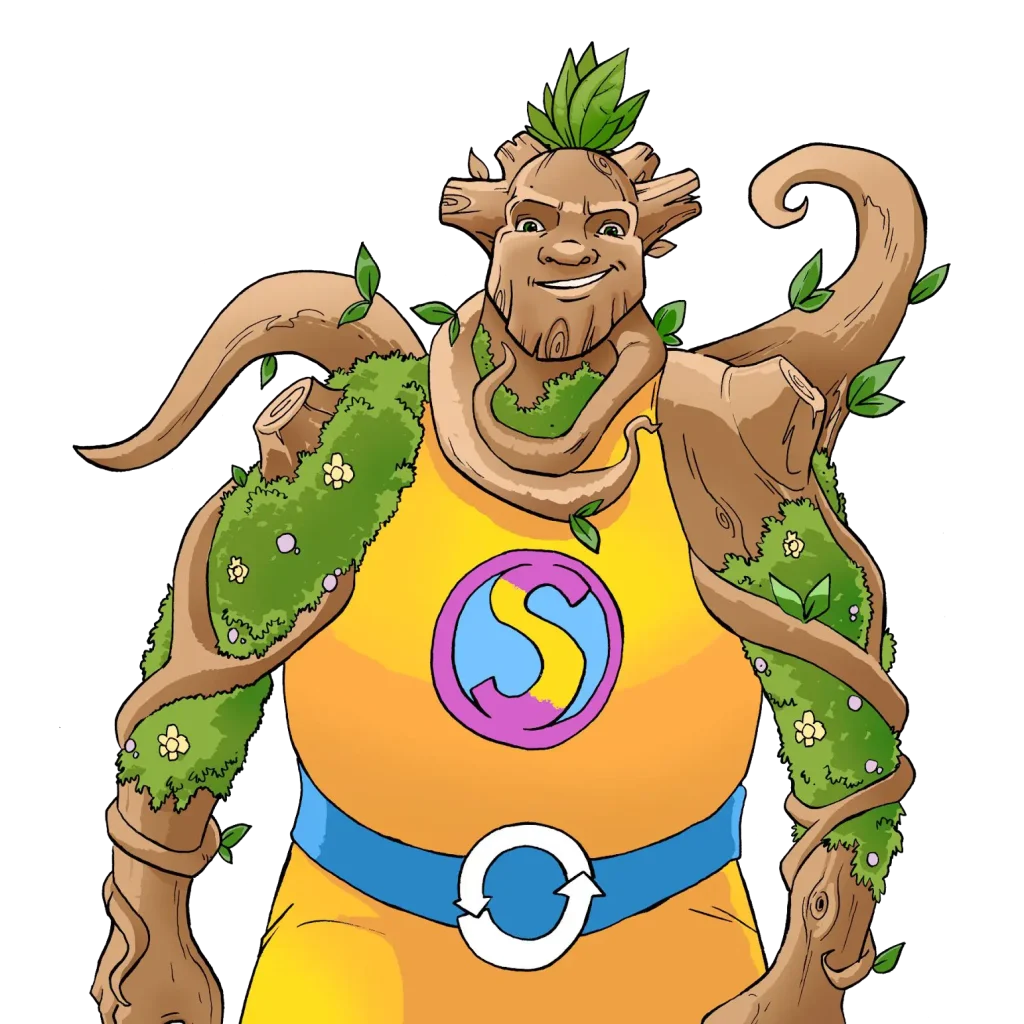
A section of a local woodland is at risk due to pollution, invasive species, and limited soil nutrients. Oggie, the Earth Steward of Organic Farming and Soil Health, enlists a team of young “Woodland Earth Stewards” to help protect this ecosystem. Their mission: investigate the woodland’s current health and create a plan to nurture and conserve it for generations to come.
Learning Objectives
Understand the basics of woodland ecosystems, including plant and soil health.
-
Recognise the impact of human actions on woodlands.
-
Develop conservation strategies for forest health and biodiversity.
1. Meet Oggie and Conduct a Woodland Survey
Oggie begins by introducing the woodland challenge and taking learners to a nearby forested area. As “Woodland Guardians,” learners observe and record the condition of the trees, plants, soil, and signs of wildlife, looking specifically for:
Soil quality indicators (e.g., moisture level, signs of erosion).
Health of trees and plants.
Presence of litter or pollution.
Evidence of invasive plant species.
Oggie’s Tip: “A healthy woodland relies on its soil, plants, and wildlife working together. Can you spot anything that might be upsetting this balance?”
2. Soil Science Experiments with Oggie
To understand how soil health affects the woodland, Oggie leads hands-on soil experiments:
Soil Composition Test: Collect soil samples and analyze their texture (sand, silt, clay) by feeling and observing with water.
pH Test: Use pH strips to test the soil’s acidity, learning about the soil needs of different plants.
Soil Nutrient Test: With Oggie’s help, learners can measure levels of nitrogen, phosphorus, and potassium in the soil.
Oggie’s Challenge: “Soil is the forest’s foundation. What can these tests tell us about how to support healthy growth in the woodland?”
3. Brainstorm Woodland Conservation Strategies
In teams, learners brainstorm conservation strategies to restore balance to the woodland ecosystem, focusing on:
Soil Restoration: Ideas for natural fertilizers like compost or mulching techniques.
Invasive Species Control: Plans to remove or contain invasive plants threatening native species.
Litter Clean-Up: Designing litter-pick areas and creating signage to encourage visitors to protect the woodland.
Oggie’s Challenge: “Use your observations and experiments to create a plan that protects both the soil and plants in the woodland.”
Learners present their findings and conservation plans to “The Woodland Council” (a group made up of teachers, classmates, or local environmentalists), detailing:
- What they discovered about the woodland’s current health.
- Their proposed strategies for soil health, plant diversity, and litter management.
- How they think these strategies will positively impact the woodland.
Oggie’s Final Challenge: “Can your team explain why each part of your plan will help protect our woodland for the future?”

Oggie to reflect on their experiences, considering:
What surprised them most about woodland conservation.
Personal commitments they can make to protect natural areas near their homes.
Learners earn their official “Woodland Guardian” badges, symbolizing their commitment to preserving woodlands and practicing stewardship in their daily lives.
Objective
To immerse learners in an outdoor wide game led by Oggie, the Earth Steward for organic farming, soil, and woodland conservation. The activity combines ‘mantle of expert’ techniques and hands-on exploration, fostering sustainability and connection to nature.
Game Overview
Learners play as Woodland Earth Stewards, a team of experts responsible for protecting and restoring a threatened local woodland. Guided by Oggie, they must complete a series of challenges to help restore balance to the ecosystem and ensure the health of the forest for the future.
Setting
An accessible woodland area or park with diverse features such as trees, soil patches, water sources, and clearings for group activities.
- Oggie’s Message
Oggie shares an introduction (either read aloud or provided on a scroll) detailing the threats facing the woodland due to soil erosion, invasive species, and pollution. Oggie calls on the learners to become Woodland Earth Stewards to safeguard these essential resources. - Roles & Group Formation
Learners are divided into small groups, each taking on different expert roles, such as:- Soil Scientist: Examines soil health and erosion risks.
- Eco-Planner: Plans spaces to protect biodiversity.
- Wildlife Ranger: Identifies plants and animals and assesses their health.
- Water Watcher: Monitors water sources for quality and flow.
Each activity is structured as a station where groups complete challenges. After finishing a challenge, they receive a Loopie token ( see rewards in our resources section on the website ) from Oggie, which they can add to their “Woodland Earth Steward Badge.”
Station 1: Soil Guardian – Soil Testing & Erosion Control
Challenge: Learners test soil samples for texture, moisture, and acidity using simple tools. Afterward, they brainstorm methods to prevent soil erosion, such as planting grass or shrubs and create a small soil protection barrier.
Outcome: They discover how soil health affects plant life and begin thinking about sustainable solutions to prevent erosion.
Station 2: Biodiversity Patrol – Invasive Species Removal
Challenge: Learners identify common invasive plants (with safe guidance) and learn why these plants harm local ecosystems. They then practice removing mock “invasive” plants made from safe, biodegradable materials.
Outcome: They understand the impact of non-native species on local ecosystems and how to restore native biodiversity.
Station 3: The Tree Keepers – Tree Health Check & Nature Connection
Challenge: Learners examine nearby trees for signs of health issues (e.g., leaf color, sap, bark texture) and tag the healthiest tree as “Woodland Heritage.” They end with a quiet, five-minute reflection to connect with the natural surroundings.
Outcome: Learners recognize the signs of healthy and stressed trees and develop a personal connection to nature.
Station 4: The Clean Waters Initiative – Water Filtration
Challenge: Learners gather water samples from a stream or pond, examine its clarity, and use basic filters (sand, charcoal, cloth) to improve it.
Outcome: They learn the importance of clean water for ecosystems and human use.
 .
.
After all stations, the groups return to Oggie to discuss what they’ve learned. They share their favourite moments and reflect on the role they played in protecting the woodland. Each learner receives a Woodland Earth Badge, symbolising their contribution.
Optional Extension:
Learners plant a small native shrub or seedling in a prepared spot, leaving a lasting positive impact on the woodland.
To foster learners’ appreciation of nature and creativity through a nature-based art expedition led by Oggie, the Earth Steward for organic conservation. The activity encourages learners to gather natural materials respectfully, create eco-friendly art, and connect with the environment through organic and sustainable practices.
Game Overview
In this game, learners become “Nature Artists” tasked by Oggie to explore the outdoors and create art inspired by the landscape. Each station focuses on different artistic techniques and fosters mindfulness and respect for the natural world. Learners will also learn about biodegradable materials and organic ways to make lasting impressions.
Setting
A forested park, meadow, or garden with ample natural materials like leaves, stones, twigs, and other plant matter.
Oggie’s Art Message
Oggie introduces the activity, emphasizing how art can connect us to the Earth and help preserve its beauty. The Nature Artists are tasked with creating art that leaves no lasting harm to the environment, using only organic or biodegradable materials found outdoors.Roles & Group Formation
Learners divide into small groups, each tasked with a different type of nature-based art. Roles include:- Leaf Pattern Makers: Focus on creating patterns and mandalas from leaves.
- Rock Sculptors: Build small, balanced sculptures from stones and twigs.
- Earth Doodlers: Use mud and leaves to make designs on paper or rocks.
- Plant Dye Painters: Create simple, natural pigments for temporary art.
Game Activities
Each station is a creative art challenge designed to help learners build a connection to nature while learning about organic resources. Completing each challenge earns them a “Loopie” from Oggie.
Station 1: Leaf Mandala – The Art of Patterns
- Challenge: Learners gather leaves, stones, and other small natural items to create intricate mandalas on the ground. They experiment with symmetry and shapes, arranging materials thoughtfully.
- Outcome: Learners practice mindfulness and pattern-making, discovering the beauty in nature’s colours and textures.
Station 2: Stone Stack Sculptures – Balancing Act
- Challenge: Using stones and twigs, learners create small, balanced sculptures. They learn about choosing the right shapes and sizes to make structures that are both stable and visually pleasing.
- Outcome: Learners enhance their sense of balance and connection to the elements, appreciating the simplicity of natural materials.
Station 3: Earth Brushes & Mud Doodles
- Challenge: Learners use sticks and leaves as “brushes” to create temporary art on paper or rocks with mud as a natural paint. They experiment with shapes, lines, and textures.
- Outcome: They learn about natural materials for creating art without manufactured tools and experience the feel of organic textures and forms.
Station 4: Plant Dye Painting – Colours of Nature
- Challenge: Learners extract colour by rubbing leaves, petals, and berries onto paper to create “painted” designs. They discover how different plants produce unique colours and textures.
- Outcome: They gain an understanding of natural pigmentation and experiment with plant-based art techniques, connecting with the landscape’s colors and patterns.
At the end of the activity, the groups take a “Nature Art Walk” to admire each other’s creations. Oggie leads a discussion on how using natural materials helps protect the Earth, and the learners reflect on the beauty of creating art that leaves no lasting impact on the environment.
Badge Ceremony: Each learner is awarded a loopie badge to celebrate their connection to nature through creativity.
Optional Extension:
Learners are invited to create a “Nature Art Gallery” by photographing their pieces, leaving the materials behind to naturally decompose.
Objective
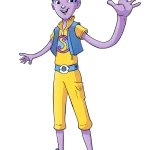
To engage Upper Primary learners in a wide game led by Plasto, the Earth Steward for plastic production and recycling within the circular economy. This game empowers learners to understand the impact of plastic, explore ways to reuse and reduce it, and foster a sense of responsibility for Earth’s resources.
Game Overview
Learners become “Plastic Protectors,” tasked by Plasto to clean up and repurpose plastic waste, explore alternatives to single-use plastics, and better recycle to preserve the extract fossil fuel and brainstorm ways to reduce plastic use and better recycling. They complete a series of hands-on challenges designed to connect them to the importance of preserving Earth’s resources.
Setting
A park or natural outdoor area with distinct stations for each activity.
Warm up activity – litter pick with a discussion on how it got there and ways to prevent.
Plasto’s Call to Action
Plasto introduces the challenge by explaining that plastic pollution is impacting the environment, harming wildlife, and disrupting ecosystems. In addition understanding that the oil in the plastic is a valuable resource that needs to be kept infinite to prevent virgin oil extraction. The Plastic Earth Stewards must reduce plastic waste, find creative uses for discarded plastics, and help protect natural spaces.Roles & Group Formation
Learners divide into small teams, each focusing on different aspects of plastic conservation:Collectors: Gather plastic items and learn about pollution.
Sorters: Separate plastic waste based on recyclability.
Inventors: Repurpose plastic creatively.
Eco-Planners: Develop ways to reduce plastic use.
Each station provides a challenge focused on different aspects of plastic waste management and conservation of both nature and the resource, reducing fossil fuel extraction and reducing emmissions. After completing each challenge, groups earn a “Plastic Loopie disc” from Plasto to attach to their Earth Steward Badge.
Station 1: Plastic Patrol – Collect & Identify
Challenge: Learners search the area for “plastic waste” (placed by facilitators) and identify each item. Discuss recyclability and human responsibility towards plastic They discuss why it might end up in nature and the impact it has on wildlife.
Outcome: Learners become aware of the sources of plastic waste and how it affects ecosystems and how keeping it circular is a good option.
Station 2: Sorting Circle – Recycling Know-How
Challenge: Learners sort collected plastic waste into different types (e.g., PET bottles, LDPE bags) and learn which types are recyclable and which are not. They discuss why some plastics are more recyclable and how to recognise recyclable symbols.
Outcome: Learners understand the limitations of plastic recycling and the importance of sorting plastic waste correctly. Understand why we don’t want virgin oil plastic anymore.
Station 3: Upcycle Workshop – Creative Reuse
Challenge: Using their imagination, learners transform clean plastic waste into something useful or decorative, such as planters, storage containers, or ornaments. They can even make bird feeders or eco-bricks by packing small plastics into bottles.
Outcome: Learners see that plastics can be repurposed creatively, helping to keep waste out of the environment.
Station 4: The 10R Plastic Plan – Preserving earth resources
Challenge: Learners brain buzz ways to reduce plastic use, such as opting for reusable bags, avoiding single-use plastic, and choosing products with minimal packaging. Understand why recycling the plastic conserves and prevents fossil fuel extraction.They create posters to encourage their community to recycle, reuse and reduce plastic.
Outcome: They understand that reducing plastic consumption is a key step in sustainability, and they’re encouraged to bring these ideas into their daily lives.
 After all stations, groups gather with Plasto to share what they’ve learned. They discuss how taking small actions can make a big difference and commit to a personal pledge to reduce plastic waste. Each learner is awarded a Plastic poppies Badge, recognising their role as Earth stewards.
Optional Extension:
Learners create a “plastic recycle zone” banner to hang in a shared community space, inspiring others to join in the mission to recycle to reduce plastic.

Objective
This game immerses learners in sustainability activities focused on metals, led by Metz, the Earth Steward for metals. Learners will explore how metals impact the environment, learn to identify and responsibly recycle metals, and understand the importance of conserving natural resources.
Game Overview
Learners become “Metal Detectives” on a mission to clean up and restore a local natural area by recovering and repurposing metal items, guided by Metz. They complete a series of challenges designed to deepen their connection to nature and raise awareness of the role metals play in sustainable ecosystems.
Setting
An outdoor park or forest area with spaces designated for each activity station.
- Metz’s Mission Message
Metz shares a story (either through a letter or role-play) about how metals found in nature are often extracted, used, and discarded without regard for their environmental impact. The Metal Detectives are tasked with locating metal items, deciding how they can be responsibly repurposed, recycled, and brain buzzing ways to reduce metal waste. - Roles & Group Formation
Learners divide into small groups, each taking on a specific aspect of metal conservation:- Metal Miners: Identify common metal items and discuss their origins.
- Recycling Rangers: Sort and recycle collected metal items.
- Crafty Crafters: Repurpose collected metals creatively.
Eco-Planners: Develop ideas to reduce metal waste
Each station provides a hands-on challenge that teaches about different aspects of metal conservation and recycling. After completing each challenge, groups earn a “Metal Steward Loopie” from Metz to attach to their Earth Stewards Badge.
- Station 1: Metal Hunt – Identifying & Gathering
- Challenge: Learners search for “metal waste” (clean, safe metal items placed by facilitators) around the designated area. They identify each item’s material and guess its origins, discussing how it may have been used and why it ended up as waste.
- Outcome: Learners understand the prevalence of metal items and discuss how to dispose of or repurpose them responsibly.
- Station 2: Sorting Station – Separating Metals
- Challenge: Groups sort gathered items by metal type (aluminium, steel, copper etc.) to learn which types of metal are recyclable. They learn about the recycling processes specific to each metal type and how recycling conserves resources.
- Outcome: Learners gain insight into the recycling processes and consider the environmental impact of different metals.
- Station 3: Repurpose Workshop – Upcycling Metal Items
- Challenge: Using their creativity, learners transform collected metal items into something useful or artistic, such as a wind chime, garden markers, or small decorations.
- Outcome: Learners see that metal waste can be creatively reused, reinforcing the importance of repurposing items instead of discarding them.
- Station 4: The Conservation Corner – Reducing Metal Waste
- Challenge: Learners brainstorm ways to reduce metal consumption in everyday life, such as choosing reusable containers or repairing metal items instead of replacing them. They create posters or pledges to encourage sustainable practices.
Outcome: They understand that reducing demand for metal products can decrease the need for mining and preserve natural resources.
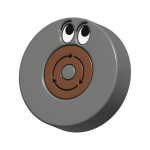 Once all activities are complete, groups gather with Metz to reflect on their findings and experiences. They discuss the impact of metal waste on nature and how responsible metal use contributes to sustainability. Each participant is awarded a Metal Steward Badge to recognise their work as a Metal Earth Stewards .
Optional Extension:
Learners plant a small tree or shrub to symbolize their commitment to sustainability and offset the impact of metal extraction on the environment.
Learners will create a small wind turbine and observe how wind energy is converted into motion.
Materials:
- Cardstock or paper for blades
- Pencils with erasers (as the turbine’s axle)
- Plastic bottle caps (as hubs for attaching blades)
- Straws or skewers (as the turbine’s mast)
- Tape or glue
- Small fan or outdoor wind
Steps:
- Divide learners into small groups and provide materials.
- Instruct learners to design and cut turbine blades out of cardstock.
- Attach the blades to the bottle cap and fix the cap onto the pencil’s eraser.
- Mount the pencil onto the straw/skewer to create a free-spinning wind turbine.
- Test the turbine by placing it in the wind or near a fan, and observe the rotation.
Discuss blade angles and redesign them to find the most efficient setup. Introduce the concept of aerodynamics and how blade shape affects performance.
Learners will understand how a wind turbine works by simulating it with their own movements.
- A pinwheel or small handheld turbine model
- Rope or string for marking boundaries
- Small objects to represent “electricity” (e.g., coloured stones or paper clips)
- Divide learners into two groups: the “Wind” team and the “Turbine” team.
- The “Wind” team uses their arms to mimic wind blowing in a specific direction.
- The “Turbine” team rotates the pinwheel or model turbine using the “wind’s” direction.
- For every full spin of the turbine, learners collect one “electricity” object and deliver it to a marked “power station” zone.
- Switch roles after a set time.
Reflect on how fast the turbine worked based on the “wind” force. Discuss how strong and steady winds in real life lead to better energy production.
Learners will explore how location affects the efficiency of wind turbines by measuring wind speed and mapping the best places to install one.
Materials:
- Anemometer (or make one using paper cups, straws, and a pencil)
- Notebook and pencil for recording data
- Compass (optional for identifying wind direction)
- Large outdoor area
Steps:
- Explain that wind turbines need strong, consistent wind to work efficiently.
- Show learners how to measure wind speed with the anemometer.
- In groups, move around the outdoor space and record wind speed in different areas.
- Plot the results on a simple map and discuss where a wind turbine would work best.
Relate findings to real-world wind farms, discussing why they are often located near coasts or on hills.
Learners will understand how the sun’s energy can be harnessed and converted into heat energy to cook or warm food.
Materials:
- Cardboard pizza box (or shoebox)
- Aluminium foil
- Black construction paper
- Clear plastic wrap (cling film)
- Tape and glue
- Ruler
- Scissors
- Marshmallows, chocolate, and biscuits (for making s’mores)
Steps:
- Prepare the Solar Oven:
- Cut a flap into the lid of the pizza box, leaving one side attached.
- Line the inner side of the flap with aluminium foil to reflect sunlight.
- Create the Cooking Base:
- Line the inside bottom of the box with black construction paper to absorb heat.
- Seal the Oven:
- Cover the cut-out section of the lid with clear plastic wrap to create a greenhouse effect. Secure with tape.
- Assemble and Test:
- Place the box in direct sunlight with the foil flap angled to reflect sunlight into the oven. Use a ruler to prop it open.
- Place s’more ingredients inside the oven and close the lid.
- Leave the oven in the sun for 30-60 minutes and observe the melting process.
- Measure the temperature inside the box using a thermometer.
- Discuss how solar panels use the same principle to convert sunlight into electricity, highlighting the difference between heat and electrical energy.