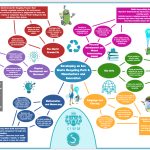
The Resource Revolution Centre
Competition.
Coming 2026/2027

UK national competition for Earth Stewardship.

Our Competition and Circular Economy and Sustainability Planning page

Join Our The Resource Revolution Centre

The Resource Revolution Centre is an Eco Waste Park Competition Journey – Academic Year 2026/2027

This page is designed to support all primary school teachers as you embark on the journey of our exciting competition, starting in Autumn 2026 

You’re welcome to join us at any stage!

Entry forms will be available from the Spring/Easter break , so keep an eye out and get ready to inspire your learners to create, innovate, and make a difference!

Contents of the page


The Competition Brief and Prizes 


How we will support this learning journey


 Tailored Learning and Teacher notes 


Learner Led Assembly Resource


The 12 pathways of the Circular Economy 


 Resources to support the learning 


The Competition outline availiable now

All About The Competition

Please Register 


Last Years Competition Supported by the Charity The Chartered Institution Of Wastes Management
2025
The Prizes - visit the prize page Update for 2026/7 coming soon

Three age Group categories

SEND – mainstream and unit 

Lower Primary 

Upper Primary 

Download entry form and submission guidelines ​

Please register your school by email 

Stating 

School and Staff contact details  

info@thesustainablesacademy.com

Please complete form below before sending entry

How will we support you planning on this journey to deliver from Summer term through to Autumn term 2025?

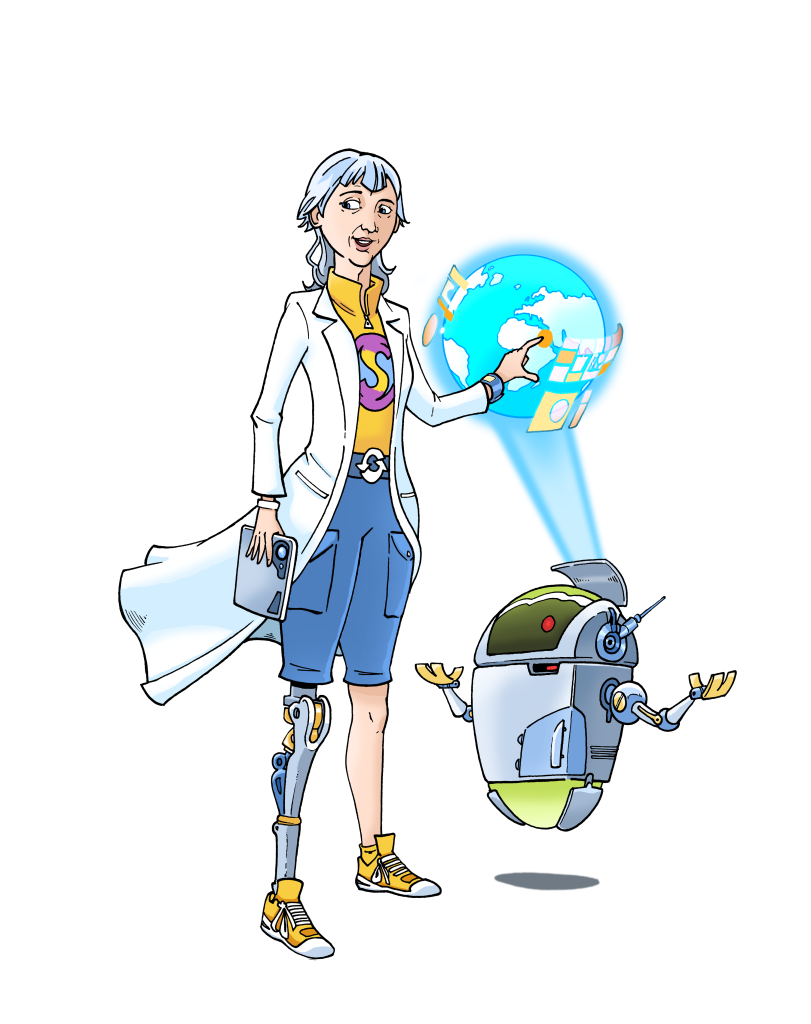
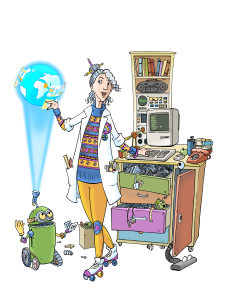
Dr Raven

We will provide a range of resources to help you deliver the competition through any of these interdisciplinary areas within the curriculum.

Eco Schools
UNCRC
Citizenship
PSHE

Our goal is to empower young people to take the lead in this topic, project, or competition within the primary setting. We also aim to lighten your workload by providing everything you need. You'll find learning starters, objective-driven lesson plans, and a wealth of free resources to support you every step of the way.

Our Green Earth Steward
Sponsor
for 2026/2027 to be announced

We will tailor The Learning and Resources


This competition will dovetail into the learning and curriculum of the four nations of the UK.

Saving teacher time and energy .

Recommended Class Readers
to go with our competition

Embed this learning into the whole of your Topic IDL learning 

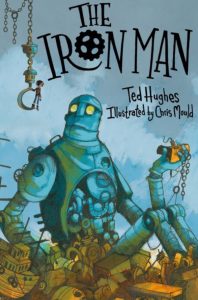
Iron Man
Upper Primary

We like this as a graphic Novel too .

Themes of reuse and repair: The Iron Man, a creature made from scrap metal, embodies the idea that discarded materials can be part of something purposeful, even heroic. It’s a perfect entry point for discussions about recycling, upcycling, and reducing waste.
Conflict and peace: The tension between humans and the Iron Man—and later, the arrival of the Space-Bat-Angel-Dragon—offers a framework to discuss conflict resolution, environmental ethics, and what it means to be a responsible global citizen.
Hope, change, and collaboration: The children’s role in saving the Iron Man speaks directly to youth empowerment, one of the key messages in sustainability education. It shows that solutions to global problems begin with empathy, creativity, and teamwork.
This novel supports deep literacy work and critical thinking while naturally integrating key concepts from the UN SDGs, especially responsible consumption and production, peace and justice, and climate action.

Using The Iron Man as a core text within a Resource Revolution centre or theme brings the circular economy to life for learners aged 7–11 in a way that’s imaginative, emotional, and unforgettable.

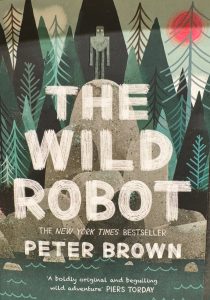
Wild Robot
Mid Primary

What happens when technology meets nature? The Wild Robot by Peter Brown explores this question in a way that is both moving and relevant—making it a perfect class reader to accompany your Resource Revolution Centre or sustainability competition.

This story of Roz, a robot who crash-lands on an uninhabited island and learns to live alongside wild animals, is a brilliant narrative gateway into sustainability learning. Here’s why:

 Nature and technology in harmony
Roz’s journey from outsider to integrated member of the island community reflects the potential for technology to support rather than harm the environment. It opens up meaningful conversations about green tech, ethical innovation, and sustainable design.

Circular thinking and adaptation
Roz is made from human-made materials—but she learns from and gives back to the ecosystem around her. This mirrors the circular economy principles of rethinking resources, reducing waste, and adapting to change.

 Empathy, resilience, and systems thinking
Learners explore systems thinking as they watch how each character—plant, animal, or machine—is part of a larger, interconnected world. Roz’s empathy and the animals’ responses to change promote values at the heart of global citizenship and Earth stewardship.

 Supports cross-curricular learning
From literacy to science, technology, design, and even wellbeing, The Wild Robot supports rich, interdisciplinary teaching. It sparks creativity for learners taking part in a Resource Revolution design challenge, while also embedding sustainability in a narrative they care about

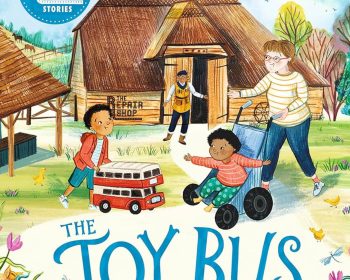
Toy Bus jpg
The Repair Shop Series
Lower Primary

If we want young learners to value our planet’s resources, we need to help them fall in love with fixing, mending, and cherishing what we already have. The Repair Shop picture book series—based on the beloved BBC show—is a beautiful and accessible way to do just that.

For schools running a Resource Revolution Centre or competition, these picture books offer more than nostalgia—they introduce learners to sustainability through heart, story, and hands-on thinking.

🔧 Celebrates repair as a form of love and responsibility
Each story focuses on fixing a treasured object, showing that repair isn’t just practical—it’s emotional, creative, and respectful. This aligns perfectly with the values of the circular economy and responsible consumption.

 Supports early systems thinking
The books naturally introduce the idea that objects have lifecycles. By extending their use, we reduce waste and conserve materials—a great foundation for understanding resource loops and sustainability.

 Encourages problem-solving and maker mindsets
As learners explore mending toys, restoring instruments, or repairing clocks, they’re inspired to think like designers and tinkerers—exactly the mindset we want to develop through a Resource Revolution competition.

 Nurtures intergenerational learning and empathy
Each story in the series connects people across generations, highlighting the value of storytelling, memory, and respect—core to community-based sustainability.

Perfect for Early Years through lower KS2 (ages 4–8), this series grounds the big idea of the circular economy in small, meaningful stories that young learners can relate to—and act on.
Our Activity

Teacher Resource Pack
with Links

Download a Resource Pack 


PPT presentation for Staff/ Collegiate meetings​
YouTube version Why enter?​

If you don’t want to present with our PPT, we have recorded the slides and provided a voiceover for you to share with staffs

Learner Led Pack
Great for your...

Eco Teams
UNCRC Ambassador
Climate Ambassadors

Cards for Presenting Assembly for Learners to use​
Our Youtube Channel


Slide Show Presentation For Student training

This is a power point that can be edited – it is designed for teachers  to train young people in Primary Lead the competition

Play script and word cards ​
Eco Waste
Fact Cards

.

Earth Stewards Display Posters​

These posters are for displaying the team – Insert Student Photo 

More Resources

Printable Leader Stewardship Badges​

Character and non character printable badges – can match with house teams and leaders of the competition etc

Participation Certificates

Download and print 

Clean Air International Day & The Resource Revolution Centre
International Month Secondhand September
Local Economies and Communities
  • Encouraging community-based solutions, such as sharing schemes and local repair hubs.
  • Reduces transportation emissions and strengthens community resilience.
  • Enhances local job creation and economic stability.
Environmental Impact and Resource Conservation
  • Measures to protect ecosystems by reducing extraction and pollution.
  • Conserving finite resources through efficient use and recycling.
  • Reduces carbon footprint and mitigates climate change.
Citizenship and Global Responsibility
  • Encouraging individuals to understand their role in global sustainability.
  • Promoting ethical consumer behavior and active participation in sustainability efforts.
  • Links local actions to global impacts.
Food Systems
  • Focus on sustainable agriculture, food waste reduction, and local sourcing.
  • Circular solutions like composting and regenerative farming.
  • Enhances food security and reduces environmental impact.
Circular Technologies and Innovation
  • Developing and using technology to support the circular economy (e.g., AI for waste sorting, biodegradable materials).
  • Fosters advancements in renewable energy and resource-efficient systems.
Circular Economy in Outdoor Learning
  • Using hands-on activities in nature to teach circular economy concepts.
  • Examples include creating compost, reusing materials in outdoor art, or exploring ecosystems’ natural cycles.
  • Builds connection to nature and reinforces stewardship values.

The Regenerative Economy
explained

Supporting educators in understanding how natural and industrial systems support our biosphere, resources and climate 

Resources to support Learning
towards our
Resource Revolution Centre Competition

Phenomenon Questions a great way to start Learning

Phenomenon Questions

Foundation Stage /Nursery 

Four topics

Biodiversity 

Innovation 

Social Impact 

Waste Management

Phenomenon Questions​

Lower Primary / Level 1/ KS1

Four topics

Biodiversity 

Innovation 

Social Impact 

Waste Management 

Phenomenon Questions​

Upper  Primary / Level 1/ KS1

Four topics

Biodiversity 

Innovation 

Social Impact 

Waste Management 

Phenomenon Questions

Upper Primary Challenge 

Level2/KS2 

Four topics

Biodiversity 

Innovation 

Social Impact 

Waste Management

Links To Youtube Clips

Curated clips to support learning 

Vocabulary

Lower Primary 

Upper Primary 

Upper Primary challenge 

Definition Match
Character Posters
Writing Frames
Presentation Competition Brief

Student Led

Lower Primary KS1- Level 1-Progression 2 

Presentation
Competition Brief

Student Led 

Upper Primary – KS2- Level 2 Progression 3

Staff Meeting Presentation of the competition

Supporting our peers in delivery of the competition

Banners

Circular Economy Banner

System s for Waste Management 

Learning Plans
England KS1& 2

Planning document to support a series of weeks learning .

Topic web England KS1 & KS2
Learning Plans
Scotland
Level 1 &2

Planning document to support a series of weeks learning .

Topic Web Scotland Level 1&2
Learning plans Wales Progression 1,2 &3
2&3 are live

Planning document to support a series of weeks learning .

Topic Web Wales Progression
Topic Web Northern Ireland - KS1 &KS2
Learning Plans Northern Ireland KS2

SDGs and UNCRC applied to our
Resource Revolution Centre Competition

SDGs

Individual Post Cards explaining and linking SDGs 

Recycling Materials

Plastics
Metals
Food

Circular Food Systems and Agriculture

Our Great National Competition
outline
Launch

Scroll to Top